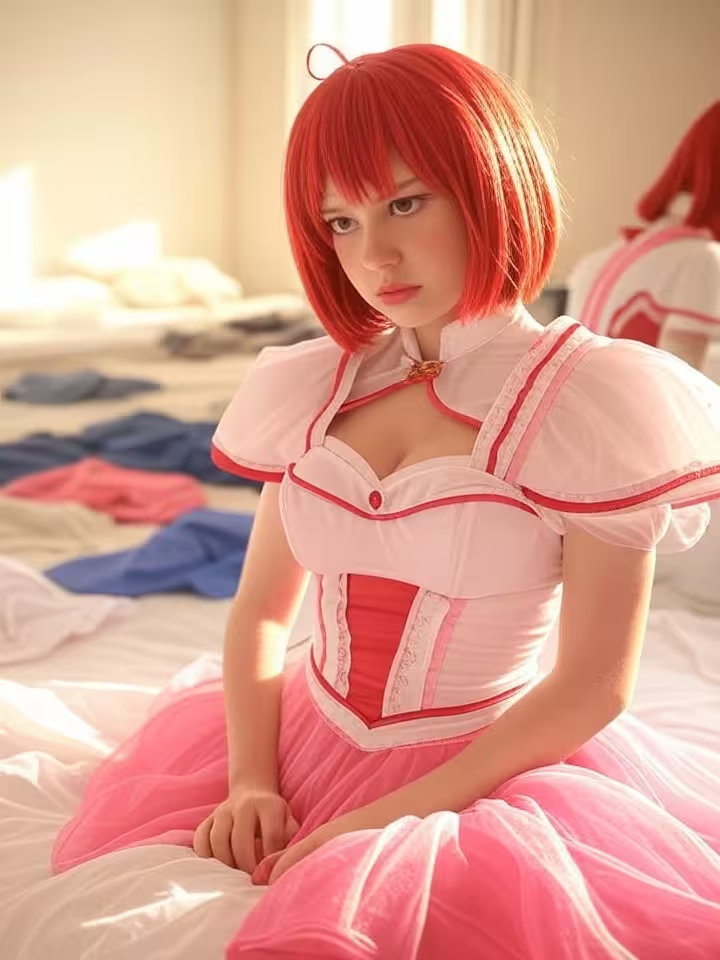
Getting started in this otaku content creation thing feels like jumping into the void without knowing if there's a safety net waiting for you below. The empty screen of the newly created profile, zero subscribers, and that constant feeling of «is anyone going to want to subscribe to my content?». I'm telling you because I lived it. My first day was a controlled disaster: half-set up profile, a banner photo I had taken with my cell phone in my room (with the pile of clothes in the background that I had to cut out later), and a bio that I rewrote about six times before having the courage to publish anything.
But here you are. And you know what, that already says a lot about you. Taking the first step, opening that profile, seriously considering monetizing your passion for cosplay... that takes courage. The truth is that reaching your first 100 subscribers isn't going to happen overnight, but it's not unattainable either. I'm going to tell you exactly how to navigate that first month without getting lost along the way, What really works (and what is a waste of time), and how to build a solid foundation that will allow you to grow later.
This article will not promise you magic numbers or secret formulas. What it will give you are real, tested strategies for turn your otaku passion into content that people want to support. From setting up your profile to creating that first set that attracts subscribers, to the tricky part of managing expectations when the numbers don't go up as fast as you expected.
The foundations: build your profile as if it were your cover letter
Before you post a single photo, you need a profile that communicates who you are and what kind of content they will find. Think of your profile as a store window: if someone walks by and doesn't immediately understand what you're selling and why they should come in, they'll just keep walking. See, I made the mistake of underestimating this in the beginning. I uploaded my first teaser with a practically empty profile, no clear bio, no thier structure... and guess how many subscribers I got? Exactly: zero.
Your alias is your first important decision. Choose something that sounds natural, that has some connection to the otaku world (characters you like, anime concepts, puns on Japanese terms), but that also protects you. No variations of your real name or nicknames that your friends use with you. This alias is going to be your public identity, so take a couple of days to choose something you are comfortable with in the long run. I changed mine twice in the first few weeks because I felt it didn't represent me, and it was a pain to update everything.
Now comes the part that many overlook: the structure of tiers. Don't copy the prices or benefits of other creators without thinking. What works for someone with a thousand followers in networks does not necessarily work for someone who is just starting out. I confess that in the beginning I set my prices too high thinking it would «make my work worth more», and I ended up with no subscribers because people didn't know my content yet. I adjusted the prices to something more affordable to build audience first, and things started to move.
A basic structure to get started might look like this:
Basic Tier (low price): access to your feed with teasers, behind the scenes of your creative process, maybe some mobile wallpapers with your favorite cosplays.
Middle tier: complete SFW sets, previews of upcoming characters, quick makeup tutorials or wig styling.
Tier premium: more elaborate content according to your comfort level (implied, boudoir, more creative and risky content), access to direct messages, character requests.
That said, don't feel pressured to offer more explicit content if it's not your thing. There are creators who focus entirely on creative and elaborate cosplays and build loyal audiences without showing more skin. The important thing is be consistent with what you offer and communicate this clearly from the outset.
Your bio needs to answer three questions in less than ten seconds of reading: who are you (genre of cosplay, style), what type of content do you create (SFW, R-15, glamour, boudoir), and what makes your content special (niche characters, production quality, specific aesthetic). Also, include a clear call to action: «Join for exclusive access to full sets» or «Support my work and get behind-the-scenes content.» And please use line breaks and emojis sparingly so it's easy to read on mobile.
The profile picture and banner are your first visual impression. Don't use casual selfies or pixelated photos. You need a clear, well-lit image that shows your cosplay style. The banner can be a collage of your best cosplays or an aesthetic image related to anime. I spent a whole afternoon in Canva designing a decent banner, and it made an immediate difference in how people perceived my profile as «professional» versus «amateur».
On the other hand, enable verification if the platform offers it. That little blue check (or whatever it's called on your platform) builds immediate trust. Potential subscribers know you're a real creator, not a fake account or a bot re-uploading stolen content. In the end, setting up your profile properly can take a whole week if you do it carefully, but it's time well spent. It's the difference between someone seeing your viral content on networks, visiting your profile, and deciding to subscribe... or visiting, not understanding what you offer, and leaving.
Protect your identity from day one
Your alias is not just a pretty name: it's your shield. Choose something completely separate from your real life, that doesn't appear on other personal networks and has no connection to your legal name. Consider using a dedicated email, a VPN when managing your profile, and never share details that can identify you (exact location, recognizable places in photos). The separation between your identity as a creator and your personal life is not paranoia. basic protection overzealous fans or uncomfortable situations.
Flexible tiers that adapt to your pace
You don't need five elaborate tiers from day one. Start with two or three simple tiers that you can maintain without burning out. A basic tier of casual content, a medium tier with full sets, and maybe a premium tier if you feel ready for more elaborate content. You can always add more levels later when you have an established content flow. The important thing is that the benefits of each tier are super clear and that you can deliver consistently.
The bio that converts visits into subscriptions
Your bio should communicate in seconds what you do and why someone should subscribe. Include your cosplay style (glamour, casual, themed), the type of content you offer (SFW, implied, boudoir), and franchises you usually do. End with a clear call to action: «Join for exclusive weekly content» or «Support my work and get VIP access». Avoid confusing jargon or vague descriptions. type of «miscellaneous content» that doesn't say anything. Be specific, direct, and honest about what they will find.
Your first content: what to publish when no one knows you yet
Here comes the moment of truth. You have your profile ready, your tiers configured, and now you need to create content that attracts those first subscribers. The pressure of that first post is real. I remember sitting in front of my computer with about twenty edited photos, unable to decide which to upload first. Do I start with something more conservative? Something bolder to get attention? A teaser that shows variety?
Well, the truth is that your first public content should be your best cover letter. Not necessarily your most elaborate photo or the cosplay that took you three months to make, but something that clearly communicates your style and quality. Think about this: someone sees your shared content on networks, clicks on your profile, and those first few posts are going to determine whether they stay or go. I started with a popular character set (Marin Kitagawa from My Dress-Up Darling) because I knew I had high search, but I gave it my personal touch with a different outdoor location and colorful editing that stood out.
The balance between showing enough to generate interest but leaving something exclusive for subscribers is an art. Your public or network posts are teasersThe photos you take: they show your style, your level of production, your personality, but the full content, the uncropped photos, the most flattering angles... that's for the subscribers. Don't be afraid to be strategic with this. A teaser can be a photo of the whole cosplay but from afar, or a close-up of the makeup and wig without showing the whole set, or a behind the scenes of you preparing for the shoot.
For your first weeks, I recommend create content in batch« if you can. Spend a full day shooting a character, take a variety of photos (different poses, expressions, angles), and then you have material for several publications. This saves you when you have busy days or just aren't in the mood to produce. I used to shoot two different characters in one day when I had good natural light, and that gave me content for two full weeks. But vary the type of content: don't just post posed photos. Include a short transformation video (from civilian to cosplay), a carousel showing the wig styling process, or a post explaining how you did some complicated prop.
Now, let's talk about frequency. How much content do you need to create in your first month? The honest answer is: enough to keep your first subscribers interested without burning out trying. If you promise weekly content, deliver on that religiously. It's better to publish one well-done set every week than three mediocre sets in one week and then disappear for two weeks. Consistency matters more than quantity, especially in the beginning when you're building trust with your initial audience.
The characters you choose matter too, though not in the way many think. Yes, cosplaying popular characters such as Zero Two or Marin will attract more initial searches. But if you just do popular cosplays without putting your personal stamp on them, you're going to get lost in the sea of creators doing the exact same thing. Find the balance: some popular characters to attract traffic, mixed with characters you're genuinely passionate about (even if they're more niche) because your enthusiasm shows in the photos.
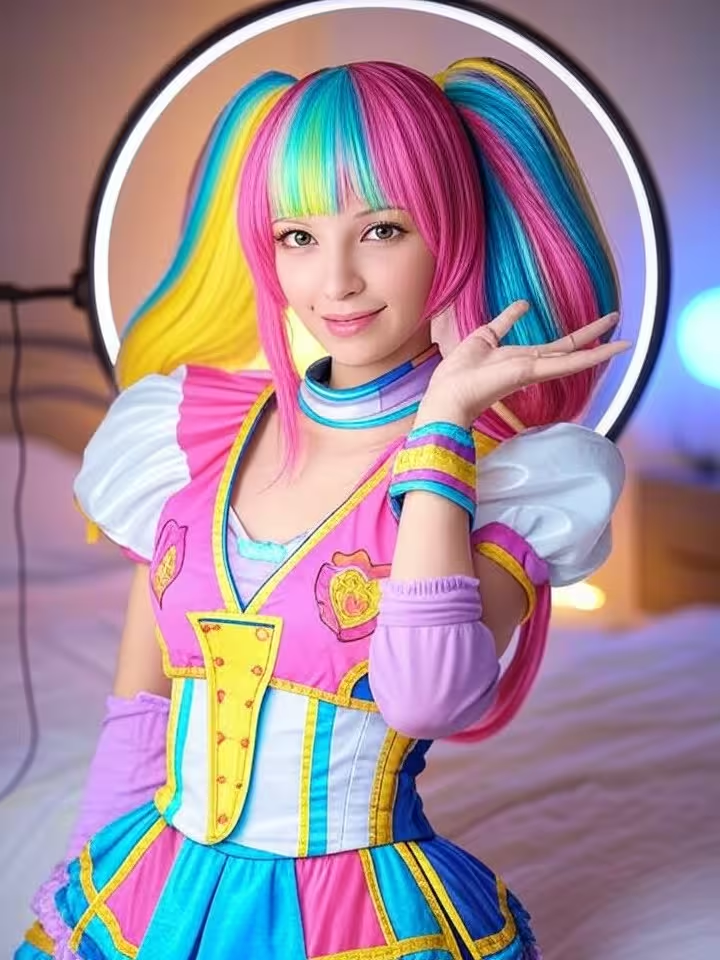
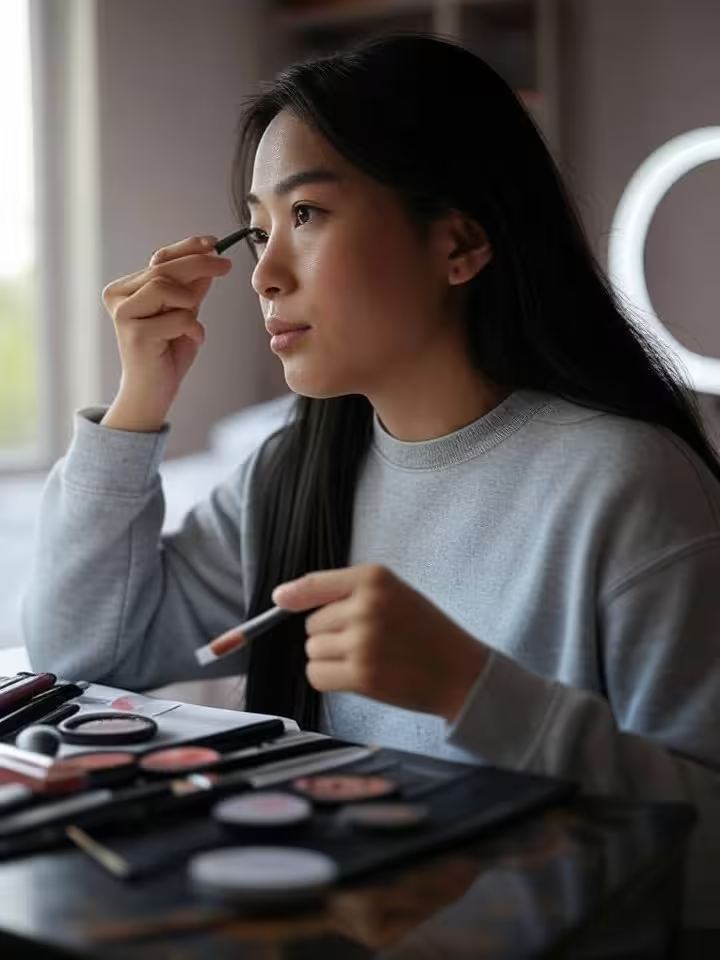
And here's the trick that no one mentions: your first content does not have to be perfect. Really. You can start with a basic lighting setup (an inexpensive ring light and natural light), a neutral background (a white wall or a hanging sheet), and your cell phone if it has a good camera. What matters is composition, your expression, and basic editing (adjusting brightness, contrast, saturation). My first set I did with a $15 tripod and my cell phone timer. It wasn't National Geographic, but it was good enough to show my style.
Regarding watermarks: use them, but use them wisely. A discreet watermark with your alias in a corner protects your content without ruining the aesthetics of the photo. Avoid those giant watermarks that cover half your body because they make your content look unprofessional, and people simply won't share it (which is just what you need to grow). Place the watermark in places where it's hard to crop it without ruining the composition of the photo.
Social networks: your secret weapon for initial growth
Let's be honest: if you just upload content to your creator profile and wait for people to magically find it, you're going to be waiting a long time. Social networks are your growth engine in those first months when nobody knows you yet. They are your way to drive traffic from platforms with millions of users to your creator profile.
But here comes the challenge: each social network has its own rules, its own algorithm, its own culture. What works on Instagram doesn't work the same on TikTok. What is acceptable on Twitter/X can get you banned on Facebook. And between us, trying to be on all networks at the same time is the perfect recipe for burnout. I'm telling you because I tried it: I had active accounts on six different platforms my first month, and I ended up exhausted posting mediocre content on all of them instead of good content on two or three.
My advice is choose two or three networks where your target audience really is, and focus on doing well there. For otaku and cosplay content, Instagram and TikTok tend to be the most effective, with Twitter/X as a third option if you're comfortable with that dynamic. Reddit also works for specific niches, but requires more caution because the communities are very strict about self-promotion.
Instagram is probably your best starting bet. It has a giant cosplay community, allows photo posts and carousels (perfect for showing different angles of a cosplay), and Reels give you the opportunity to go viral. The key on Instagram is visual consistency: your feed should have a coherent aesthetic, with similar editing between photos to make it look professional. Use all available formats: posts for your best photos, stories for behind the scenes and more casual content, Reels for trends and quick transformations. And please, optimize your hashtags. Don't use the 30 allowed hashtags with generic things like #cosplay or #anime that have millions of posts. Mix popular hashtags with more specific ones (#genshinimpactcosplay, #boudoircosplay, #cosplayersofinstagram) where your content has a chance to stand out.
TikTok is a completely different beast. Here the algorithm can make your video reach thousands of people even if you have no followers, but it can also bury your content for no apparent reason. What works on TikTok is entertaining, fast-paced content with personality. The transformations (from civilian to cosplay in 15 seconds) work amazing. The trends adapted to the otaku community as well. Storytime about convention experiences, quick anime makeup tips, «photo vs. reality» comparisons of your cosplays. The key is to hook in the first three seconds because people scroll very fast. And use the viral sounds of the moment, even if you have to creatively adapt them to your content.
Twitter/X has a very active cosplay community, especially for more daring content. Here you can be more direct in promoting your creator profile, but you need to provide value beyond just «subscribe to my content».». Share your photos, but also participate in conversations, respond to other cosplayers, share tips or experiences. Threads work well if you have something interesting to tell: the process of creating a complicated cosplay, your experience in your first convention, comparison of makeup products you use. And here yes, discrete watermarks are essential because content is constantly being shared (and stolen).
Honestly, Reddit was harder for me to understand. Each subreddit has different rules about self-promotion, and if you break them even accidentally, you get banned fast. But if you do it right, you can find super responsive communities. Look for subreddits of the franchises you cosplay (r/Genshin_Impact, r/DemonSlayer, r/evangelion) and share your cosplay there as a genuine fan, not just as promotion. The general cosplay subreddits (r/cosplay, r/cosplayers) also work if you follow the rules of each to the letter. Read the rules before posting, respect the designated days for certain types of posts, and never post direct links to your creator profile unless explicitly allowed.
What few people mention is the importance of responding to comments and messages in social networks. Especially in the beginning, when every interaction counts. If someone comments «beautiful cosplay» on your post, respond with more than just «thank you». Ask them if they know the character, tell them something quick about the process of making it, make them feel seen. Those micro-interactions build community and loyalty before anyone even subscribes. I would spend about half an hour a day responding to comments on Instagram, and several of my first subscribers came from those casual conversations where someone would ask «do you have any more photos of this cosplay?» and I would direct them to my profile.
Besides, here's the interesting thing: not all your content on networks needs to be cosplay itself. You can share your collection of figures, make unboxings of otaku products you buy, show your work setup, talk about your favorite anime of the season. This kind of content positions you as part of the otaku community, not just as someone who sells content. And that creates a real connection with your audience, which translates into subscribers who stick around for the long haul.
Why am I not growing as fast as I expected?
Here comes the hard part to talk about, but necessary. You may do everything «right»-good profile, decent content, network presence-and still your numbers grow slowly. Painfully slow. You're in week two or three, and you have five subscribers (two of them probably friends who subscribed to support you). You start to wonder if it's worth it, if you should create more explicit content to «compete,» if you're just not good enough for this.
Breathe. What you are experiencing is completely normal, even though no one warned you before you started. The fantasy is that you create a profile, upload content, and the next day you have 50 paying subscribers. The reality is that building a subscriber base takes time, consistent effort, and more patience than you probably have right now. I confess that my first week I got exactly zero subscribers. The second week, two. It wasn't until week four that I started to see more consistent growth, and that was after adjusting a lot of things I was doing wrong.
So why may growth be slow at first? First, because no one knows you yet. You don't have reviews, you don't have previous subscribers sharing your content, you don't have that social proof that makes other people trust you to subscribe. It's the classic chicken and egg problem: you need subscribers to attract more subscribers. That's why the first 20-30 are the hardest to get. Once you pass that initial threshold, growth becomes more organic because your content starts showing up in searches and recommendations more frequently.
Second, it may be that your network content is not optimized to convert visitors into subscribers. Do you have the link to your profile clearly visible in your bio, and do your posts include subtle calls to action? Are the photos you share publicly good enough to generate interest, but leave some intrigue about what else you have? Analyze your conversion funnel: out of every 100 people who view your content on networks, how many visit your profile? Of those, how many actually subscribe? If your traffic numbers are fine but conversion is low, the problem may lie in how you present your profile or your pricing.
Third, and this one hurts, If your content simply needs to be improved, it may be that your content simply needs to be improved. Not in terms of «showing more» (which is the trap that many fall into), but in terms of production quality. More careful lighting, more polished editing, more flattering poses, more natural or sensual expressions depending on your style. Look at the content of established creators in your niche (without falling into toxic comparison) and objectively analyze: what are they doing differently? Is the lighting better? The compositions more interesting? The editing more professional? Identify those gaps and work on closing them little by little. I invested in a basic softbox in my second month because I realized that my lighting with only natural light was too inconsistent, and the difference in the quality of my photos was noticeable.
Fourth, it may be a niche problem. If you're cosplaying very new or obscure series, your potential audience is simply smaller. That doesn't mean that you should stop doing what you're passionate about, but balance your content: some cosplays of popular series to attract traffic, mixed with the niche characters you really love. Or find ways to make your niche cosplays more discoverable: specific hashtags, posts in communities dedicated to that series, collaborations with other fans.
That said, there are certain common mistakes that slow down growth and are easy to correct once you identify them. Pricing too high for someone with no established audience (lower your prices initially to build a base, you can raise them later). Lack of consistency in posts (if you promise weekly content and then disappear for two weeks, your subscribers leave). Confusing or unclear bio about what type of content you offer. Overly invasive watermarks that cause no one to share your photos on networks. Lack of interaction with your community (if you ignore comments and messages, people feel that you just want their money and there is no real connection).
On the other hand, it is also important to manage realistic revenue expectations. If you went into this thinking that in a month you were going to be earning enough to quit your job, you're probably going to be disappointed. Most creators take several months (sometimes more than a year) to reach a really significant income. Your first few months are an investment: investment of time creating content, investment of effort building a network presence, investment of patience as your audience slowly grows. The revenue comes later, when you have an established base of loyal subscribers.
One thing that helped me when I was frustrated with slow growth was focus on progress metrics other than just number of subscribers. How many likes and comments are your posts getting this week compared to last week? How many visits to your profile? How many messages from interested people? Those are all signs that you're making progress, even if the paid subscribers aren't coming in droves yet. Celebrate those little breakthroughs: your first comment from someone saying your cosplay is the best they've seen of that character, your first photo shared by a fan account, your first message asking how you did a certain detail of your costume.
And you know what, if after an honest month of consistent effort you're still not seeing traction, it's okay to take a step back and recalibrate. Review your strategy: are you on the right networks? Does your content really stand out or does it get lost among thousands of similar posts? Is there anything you can improve without compromising your boundaries? Sometimes a small tweak-changing your editing style, focusing on a specific type of cosplay, being more active on certain subreddits-can make the difference between stagnation and growth.
Protect your mental well-being in the process
I'm going to be straight with you about something that is not talked about enough: creating content for monetization can be emotionally draining, especially at the beginning when you're investing a lot of effort and seeing few results. There's the constant pressure to create new content, the anxiety of checking your stats every hour to see if you got one more subscriber, the inevitable comparison with other creators who seem to be growing much faster than you. Not to mention dealing with negative comments, weird messages, or the nagging feeling that you're «selling your image» in a way that sometimes makes you question whether you really want to do this.
The truth is that your mental health should take priority, even over the growth of your profile. If you're feeling burnt out after two weeks, something needs to change. You may be creating too much content too fast. It may be that you're spending too much time on networks comparing yourself to others. You may need to set clearer boundaries on what kind of content you're willing to create and what's off the table for you, no matter how much «more it would sell.».
Establish boundaries clear from the beginning, both with your audience and with yourself. Decide which days you are going to create content and which days are completely free. Decide what kind of messages you will respond to and which ones you will simply ignore or block. Decide how much of yourself you're willing to share and where your personal line is that you won't cross. These decisions protect you from burnout and from ending up doing things you didn't want to do just because you felt pressure to grow faster.
It is also important to don't let metrics define your value. Your number of subscribers does not determine if you are a good cosplayer or creator. There are a thousand factors that influence growth, many out of your control (algorithms, timing, luck). Focus on improving your craft, on enjoying the creative process, on genuinely connecting with people who do value your work. The rest will come with time and persistence.
Tools and resources you really need
Let's talk about the practical: what do you really need to get started versus what is nice-to-have? but not essential. Because it's easy to fall into the trap of thinking that you need expensive, professional equipment from day one, when the reality is that you can start with much less.
Essential basic equipment:
Decent camera: Your phone is probably good enough if it has a good camera (most modern smartphones have cameras that rival cameras from a few years ago). If you want to invest, an entry-level mirrorless camera is a great upgrade, but not essential at first.
Basic lighting: A ring light is inexpensive and makes an immediate difference in the quality of your photos. If you can, add a softbox for softer, more professional lighting. Natural light is also excellent, but only available at certain times of the day.
Tripod or stand: For controlled selfie photos. You don't need an expensive one, a basic one with Bluetooth shutter works perfect.
Simple backgrounds: A plain, neutral wall works. If you want variety, an inexpensive sheet or backdrop from Amazon gives you options.
For editing, you don't need professional Photoshop if you're just starting out. Lightroom mobile (it has a free version) allows you to make basic exposure, contrast and color adjustments that dramatically improve your photos. Snapseed is another super powerful free app. If you want more advanced editing later, invest in the paid version of Lightroom or learn basic Photoshop with YouTube tutorials.
As for cosplays, you don't need to spend a fortune on $500 commissioned costumes. Closet cosplay (putting together characters with clothes you already have or cheap combinations) works perfectly to start with. Swimsuit and bikini cosplays are also affordable and popular options. Platforms like AliExpress have inexpensive cosplays that with minor adjustments look good in photos. The important thing is the overall styling: well done makeup, properly styled wig, accessories that complete the look. Those details matter more than whether the costume cost $50 or $500.
Useful resources to learn and improve: YouTube has thousands of tutorials on cosplay photography, photo editing, anime makeup, wig styling. The r/cosplay subreddit has guides on their wiki on just about everything. Discord communities of cosplayers are excellent for asking questions and receiving constructive feedback. And don't underestimate the power of simply studying the work of creators you admire: analyze their lighting, their poses, their editing, and practice replicating those elements in your own style.
Lighting: the difference between amateur and professional
Don't underestimate the power of good lighting. A $30 ring light can completely transform the quality of your photos, eliminating harsh shadows and giving your skin that soft glow characteristic of professional photos. Learn to use natural light as well: golden hours (early morning or before sunset) give beautiful warm lighting. If you invest in anything, invest in lighting rather than a camera-a well-lit cell phone photo looks better than a poorly lit photo with an expensive camera.
Editing that enhances without appearing artificial
Editing should enhance your photos, not transform them into something unreal. Learn how to adjust exposure, contrast, saturation and white balance so that your photos have vibrant colors and look professional. Skin retouching should be subtle-remove temporary imperfections but don't erase all skin texture because it looks artificial. Lightroom mobile lets you create presets with your favorite settings to maintain visual consistency throughout your content. Spend time learning basic editing, it's one of the most valuable investments of time you can make.
Constantly learns from the community
The cosplay community is full of creators willing to share knowledge. Join Discord groups, participate in relevant subreddits, follow YouTube tutorials on specific techniques you want to improve. Ask questions when you don't understand something-most people are happy to help. Study the work of successful creators in your niche not to copy them, but to understand what elements make your content stand out. With each set you create, you're going to get a little better. The learning curve is part of the process.
The right mindset for the long term
Here comes the philosophical, but important, part. Creating content as a job is not for everyone, and it's completely fine if after a month you decide it's not your thing. There's no shame in trying something and realizing that it's not what you expected or that the effort required isn't worth it for you. But if you decide to continue, you need to cultivate a specific mindset to survive the inevitable ups and downs.
First, get rid of the idea of «quick success».». Stories of creators who went viral in their first month and got a thousand subscribers are the exception, not the rule. Most of us grow slowly, step by step, set by set, subscriber by subscriber. And that's okay. Slow but consistent growth is more sustainable in the long run than a viral boom followed by stagnation.
Second, find your motivation beyond money. Yes, you're here to monetize, that's valid and honest. But on the tough days when income is minimal, you need another reason to keep creating. It can be the genuine love for cosplay and character creation. It may be the community you're building and the real connections with fans who appreciate your work. It could simply be the creative challenge of improving your photography or makeup technique. Find that intrinsic motivation that sustains you when extrinsic motivation (money, numbers) fails.
Third, accept that there are going to be bad days. Days where you feel ugly in all the photos. Days where you spend hours editing and the result is not what you expected. Days where you get a hurtful comment or lose subscribers for no apparent reason. These days are part of the package. They don't mean you're bad at it or that you should give up. They mean you're doing something vulnerable and public, and that carries emotional risk.
Fourth, celebrate your victories, especially the small ones. Your first paid subscriber. Your first comment saying that your cosplay is the best of that character they've seen. Your first photo to reach a thousand likes. Your first month surpassing $50 in revenue. These are all real victories that deserve recognition. It's easy to fall into the trap of «never enough» and focus only on the distant goal of 1000 subscribers or four-figure revenue. But if you don't celebrate progress along the way, the journey becomes miserable.
And finally, remember that you can always adjust your course. If something is not working, change it. If a type of content doesn't make you happy, stop creating it. If a tier doesn't have subscribers, modify or delete it. Nothing is set in stone. Your profile, your content, your strategy... everything is adjustable based on what you learn about your audience and yourself in the process. Flexibility to evolve is a strength, not a weakness.
Looking beyond the first month
If you managed to reach 100 subscribers in your first month, genuine congratulations. If you hit 50, that's awesome too. And if you're at 10 or 20, don't be discouraged.you are ahead of the 90% of people who think about doing this but never take the first step.. The first month is about laying the groundwork, learning the fundamentals, making mistakes without fear, and building momentum.
Looking ahead, growth becomes more organic once you have that initial base. Your existing subscribers start sharing your content. Algorithms start to recognize that your content generates engagement and show it to more people. Your technique improves with each set you create. Your confidence in front of the camera feels more natural. Everything becomes a little easier, though never completely easy.
Next steps after your first month could include: experimenting with new types of content (video, interactive polls, casual streams), collaborating with other creators for cross-promotion, investing in better equipment if your income allows, attend conventions to network and create content, diversify your monetization platforms. But all that comes later. For now, focus on mastering the basics we cover here.
And remember: every successful creator you admire had a rough first month too. They had moments of wanting to give up, of feeling inadequate, of wondering if anyone was really going to subscribe to their content. The difference between those who made it and those who didn't was simply persistence. They kept creating, kept improving, kept showing up even when it was hard.
You have everything you need to make this work. Now go and create something amazing.
Frequently asked questions about the first month as a creator
How much money do I need to invest to get started?
You can start with minimal investment if you use what you already have. Your cell phone with a good camera, natural light, and clothes from your cosplay closet are enough to get you started. If you want to invest, a basic ring light ($20-40) and an inexpensive tripod ($15-30) will immediately improve your quality. Recommended starting budget: $50-100 for basic lighting and maybe an inexpensive cosplay from AliExpress. You don't need thousands of dollars worth of professional equipment to get started-better invest in gradual improvements as you generate income.
Do I have to show my face in the content?
Not necessarily. There are successful creators who focus their content on cosplay and poses without showing their face clearly (using angles, editing, character masks). However, showing facial expressions and character makeup is an important part of cosplay and can help with engagement. If you decide not to show your face, focus on creative compositions, cosplay details, and overall aesthetics to compensate. The decision is completely up to you based on your comfort level with privacy and exposure.
How many different cosplays do I need to have at the start?
Start with 2-3 different cosplays that allow you to create a variety of content without getting overwhelmed. You can make multiple sets of the same cosplay in different locations or styles (casual, boudoir, outdoor) before you need a new one. The important thing is quality over quantity-better to have two well-made cosplays with 5-6 sets each than five mediocre cosplays with sparse content. As you generate income, invest in gradually expanding your collection into characters you know your audience wants to see.
What do I do if someone leaks my content?
First, breathe-leaks are frustrating but unfortunately common. Use reverse image search tools (Google Images, TinEye) to find where it was shared. If it's on a large platform, send a DMCA takedown notice explaining that you own the copyright and demand immediate removal. Most platforms respond within 24-48 hours. To prevent, use unobtrusive but difficult to remove watermarks without ruining the photo. Some Telegram or Discord groups are harder to control-focus on the most visible leaks. And remember: while it's annoying, it doesn't mean you've failed. It happens to everyone at some point.
Is it normal to feel insecure about my content?
Absolutely normal and practically universal. Imposter syndrome is real in this world-you doubt your content, you compare yourself to established creators, you wonder if anyone is really going to pay for what you offer. Almost all of us go through this, especially in the beginning. Over time and as you get positive feedback from subscribers, that insecurity diminishes (although it never goes away completely). It helps to remember that you are learning, that you improve with each set, and that your first subscribers chose to support you precisely because they see value in your work. If insecurity paralyzes you, talk to other creators in supportive communities-you're not alone in this.
I remember my first cosplay like it was yesterday. It was Asuka from Evangelion, and if I'm being honest, the costume was basically closet cosplay armed with...
Why conventions are looking for creators with an established presence Here's the unfiltered truth: invitations as guest of honor do not appear from the...
Kimberly Guadalupe Loaiza Martínez is not just a Mexican influencer; she is a digital phenomenon who has redefined what it means to build an empire from the...
Please note:
This action will also remove this member from your connections and send a report to the site admin.
Please allow a few minutes for this process to complete.








 English
  Español
  Português do Brasil
  Français
  Deutsch
  Italiano
  Svenska
  Polski
  Nederlands
Responses