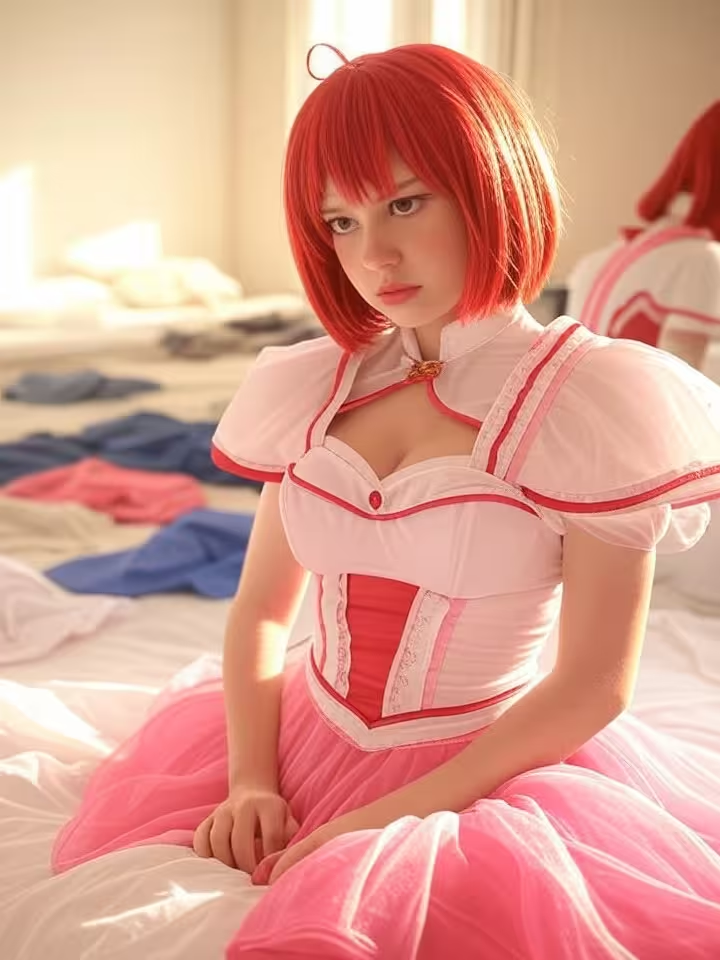
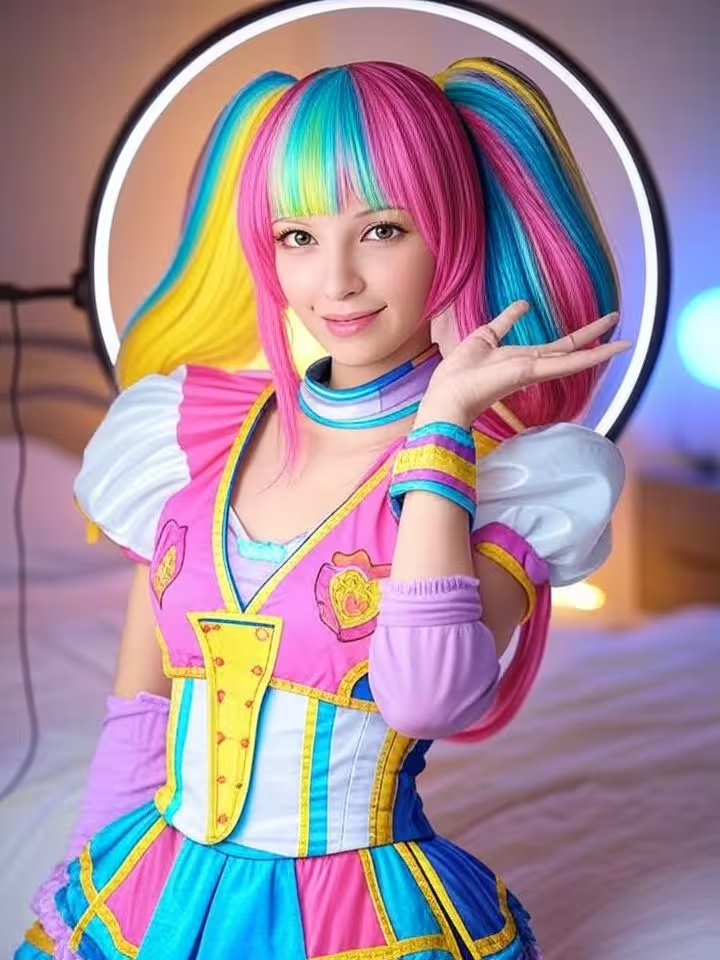
I remember my first cosplay like it was yesterday. It was Asuka from Evangelion, And if I'm being honest, the costume was basically closet cosplay put together with whatever I had on hand. The wig itched horribly, the plugsuit threatened to come undone every time I moved, and my false eyelashes came off mid-afternoon. But when I uploaded that photo to Instagram-with all my insecurity in tow-the likes started pouring in. So did the comments. And something clicked in my head.
Maybe this could be more than just a weekend hobby. Maybe there was a way to turn my love for anime and cosplay into something that would allow me to make a living from what I am truly passionate about. Years later, creating photo sets and building a community on OtakuOshi, I can tell you that it is possible.. It's not magic or blind luck. It's strategy, perseverance, and a little bit of courage to try new things. I'm going to tell you everything I learned along the way, as if we were having coffee backstage at a convention.
Why do so many cosplayers struggle to monetize their content?
Look, the reality is that creating profitable otaku content is not just about putting on a suit and waiting for money to rain down.. At first I thought exactly that. «If I upload pretty pictures of my cosplays, people will support me,» I kept telling myself. But the content creation ecosystem is much more complex than that.
The main problem is the market saturation. There are thousands of amazing cosplayers posting every day. So how do you stand out? The answer is not just in the technical quality of your photos (although it helps), but in finding your unique voice, building a real connection with your audience, and understanding that this is part art, part business.
In addition, many girls start without a clear strategy. They publish when they feel like it, without a content calendar, without thinking about what platforms to use for what kind of material. I made that mistake for months. I was uploading everything to Instagram without thinking that I might be saving my best content for a membership platform like OtakuOshi, where fans pay for exclusive access.
Another giant obstacle is the fear of judgment. We live in a culture that still stigmatizes female content creators, especially when that content has risqué or suggestive elements. I confess that for a long time I hesitated to do sets beyond SFW for fear of what people would say. But then I understood something fundamental: you define your limits, and any level of content you choose is valid..
Find your niche without forcing yourself to be someone you're not
Here comes the part that no one tells you at the beginning, but which is pure gold: Trying to go viral by copying what works for others is the perfect recipe for burnout.. I know because I lived it.
In the beginning, I cosplayed what was trending. Yor from Spy x Family, Power from Chainsaw Man, Ruby from Oshi no Ko... Characters that I saw exploding on TikTok. And yes, I got visibility, but I felt empty. The pictures came out technically correct, but lacked soul. When you're not really passionate about the character, it shows. The twinkle in your eye doesn't lie, and the fans pick up on it.
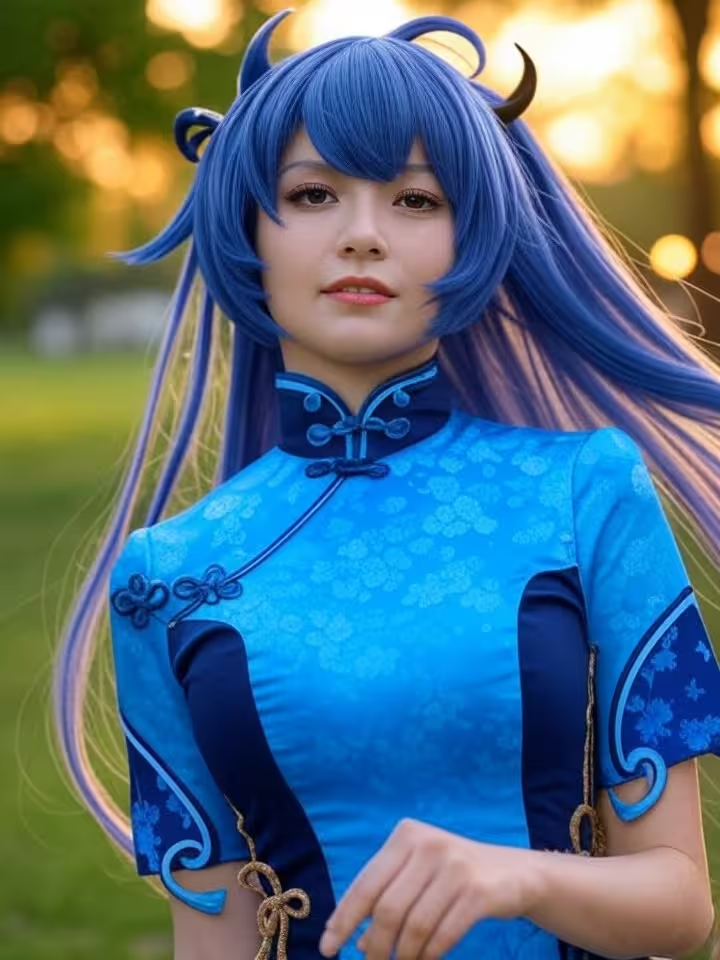
The breaking point came when I decided to cosplay a character I loved but wasn't mainstream: Ganyu of Genshin Impact in his qipao version. I had played the game for hours, I understood his personality, his inner conflict between his human and adeptus heritage. That set was one of my most successful, not because the character was trending, but because it the emotional connection was conveyed in every photo.
Authenticity over trends
Don't chase viral characters if you don't connect with them. Fans detect when there is genuine passion behind a cosplay. Choose characters you really love, study their personality, their backstory. That emotional connection comes through in every photo and video you create, and that's what builds a loyal audience willing to support you financially.
Strategic variety
Mix different types of content: SFW with full cosplays, implied with more suggestive sessions, boudoir with elegant but daring poses. This diversity keeps your profile fresh and attracts different types of fans. Some will prefer your creative and artistic side, others your more sensual side. All are valid and can coexist in your strategy.
Specific niches work
Specific niches attract more committed fans. Whether you specialize in Hololive vtubers, gacha games characters, monster cosplays or kemonomimi, you're going to find a passionate community willing to support you. You don't need to appeal to everyone-just to your tribe, the one that really values what you do.
That said, avoid the trap of constant comparison. It is easy to fall into the cycle of looking at top creators such as Jessica Nigri and think «I'm never going to get to that level». But she's been building her brand for more than a decade. You're on your own path, with your own timeline.
Also, note that the most common mistake is thinking that you need to make more explicit content to be successful. It is a lie. I've seen SFW creators who earn very well because they deliver extremely high quality sets, with thoughtful production, visual storytelling, and a genuine connection to their community. If you decide to explore more daring content, do it because YOU want to, not because you feel external pressure.
Set up your production setup without going bankrupt in the attempt
Well, here comes the technical part, but I promise it's not as complicated as it sounds. You don't need thousands of dollars in equipment to create content that monetizes. I really don't.
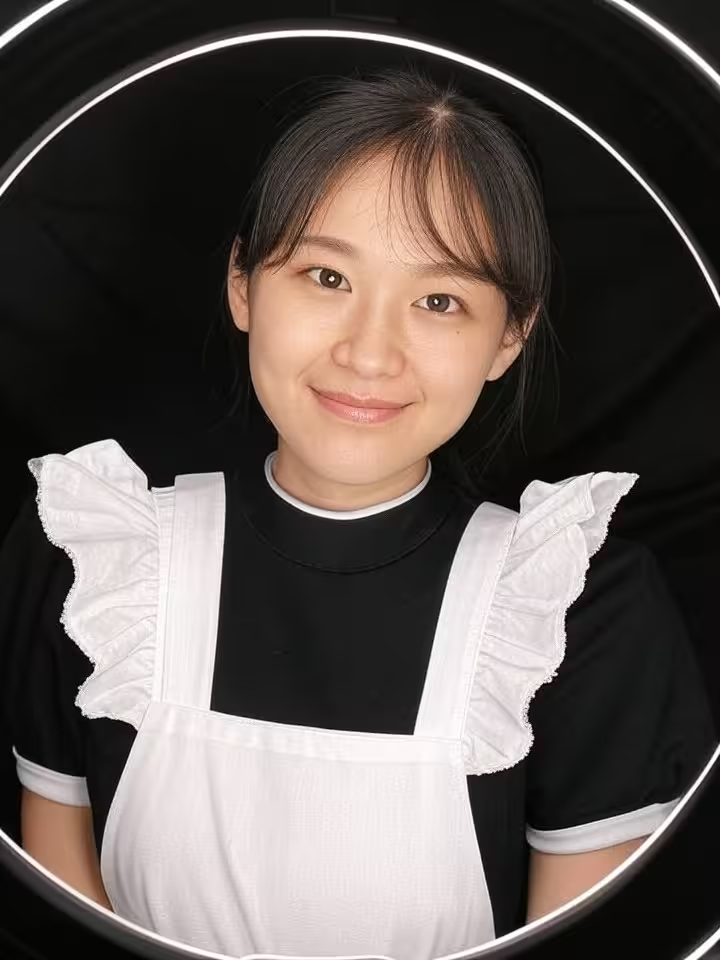
When I started, my entire setup cost less than $200. A basic tripod from Amazon, an 18-inch ring light, and a black backdrop that was literally a sheet nailed to the wall. I edited in Lightroom with free presets I found on Pinterest. My first photos weren't technically perfect, but they had personality, and that's what matters in the beginning.
Over time, I invested in better equipment as I generated income. An entry-level SLR camera (I used a Canon T7i), a couple of softboxes for better lighting, backgrounds of different colors for a change of scenery. But all this came gradually, reinvesting what I earned. The mistake is to get into debt at the beginning by buying professional equipment that you don't even know how to use..
The truth is that light is more important than the camera. Yes, you read that right. Good lighting can make a photo taken with a cell phone look professional.. Natural window light during golden hour is free and beautiful. A ring light gives you that even frontal lighting that favors selfies and close-ups. If you want to invest a little more, two softboxes on the sides create studio lighting that eliminates harsh shadows.
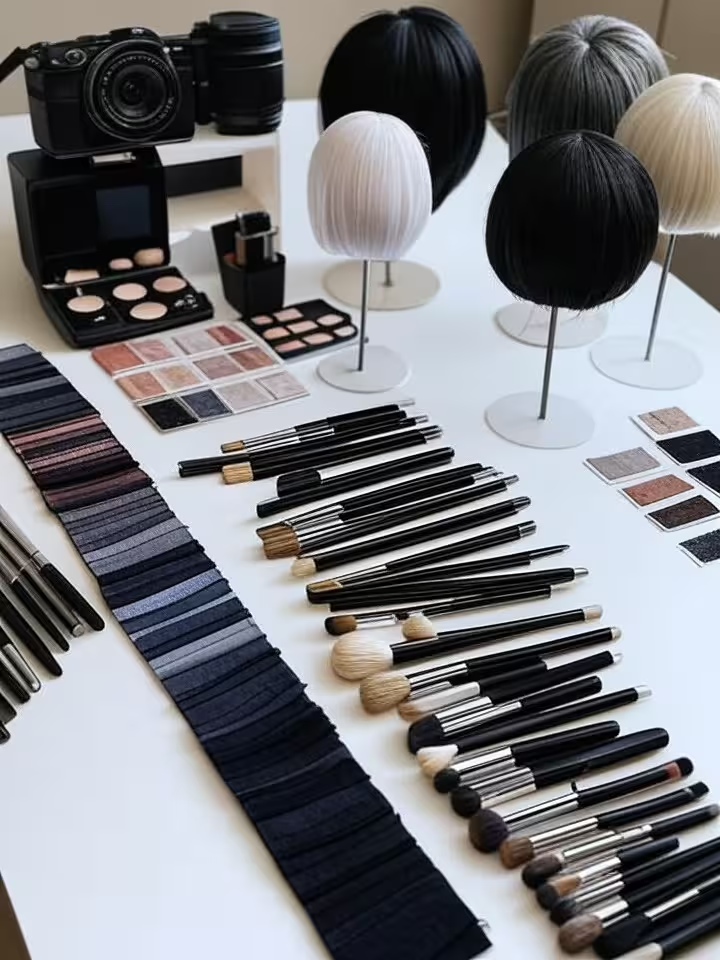
Basic equipment to start creating cosplay content
Let me break down what you really need at the beginning:
For basic photography: Your current smartphone probably has a better camera than you think. Recent iPhones and mid/high-end Android phones take perfect photos for social media. Add a tripod with a bluetooth remote control ($30-40) and you're ready to take more carefully composed self-portraits. An entry-level ring light costs between 40 and 80 dollars and radically changes the quality of your photos.
For editing: Lightroom Mobile has a very complete free version. Snapseed is great for quick retouching. When you want something more advanced, the Adobe Photography plan (Lightroom + Photoshop) costs around $10 per month. There is free tutorials on YouTube that teach you everything you need to know about skin retouching, color adjustment, and atmosphere creation.
For backgrounds and scenery: At first, your own room works. A plain wall, your bed with nice sheets, a corner decorated with LED lights. Fabric backdrops cost between $20 and $50 on Amazon. If you want something more elaborate, look for free locations: parks, buildings with interesting architecture, conventions (where you can also network).
However, visual consistency is key to brand building. You don't need all your photos to be identical, but it does help to have a recognizable style. Maybe you always use presets with warm tones, or your editing has high contrast with saturated anime-style colors. This makes it so that when someone sees your content in their feed, they immediately identify it as yours.
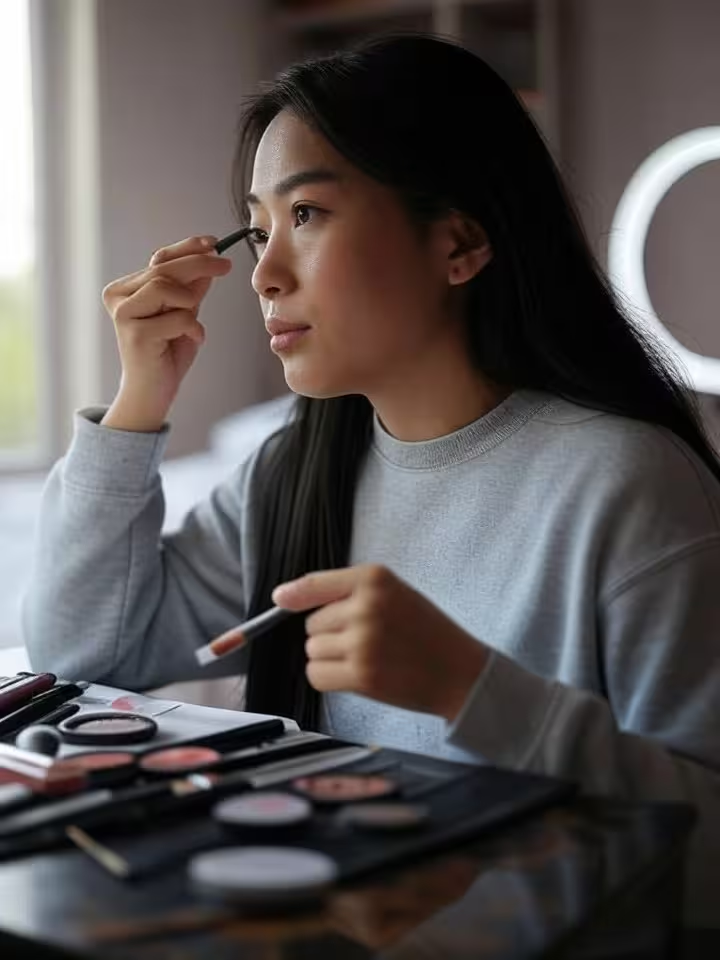
I confess that my first GRWM (Get Ready With Me) on TikTok was recorded with my cell phone leaning against books because I didn't have a tripod. I was showing how I applied body paint for a Nezuko cosplay from Demon Slayer, with all the mistakes included-the first coat came out wrong, the eyelashes were sticking crooked. That video went viral because it was real. People love to see the process, not just the perfect result.
Organize your production so as not to die in the attempt
Here's the trick that saved me from burnout: batch creation. Instead of doing one set a week, spend a full day doing three or four different sets. You change outfits, wigs, backgrounds, and shoot everything together. Then you have a whole month's worth of content that you can edit and publish at your leisure.
Create a simple content calendar. It doesn't have to be super elaborate-I use Google Calendar and simply mark which days I post to Instagram, which days I post new sets on OtakuOshi, when I do stories interacting with fans. Consistency is more important than perfection. It is better to publish good content regularly than perfect content every three months.
And you know what, protect your work from the start. Subtle watermarks on your photos are essential. They don't need to be huge and ugly-something discreet with your name or logo in one corner is enough to make it difficult for content to be stolen. Sadly, piracy is real. I once found an entire set of mine leaked on Telegram, and it was a tough blow. But I acted fast with DMCAs and managed to get it down. Don't keep quiet if it happens to you-there are legal ways to defend your content.
Build a community, not just an audience
This is probably the most important lesson I learned: there is a huge difference between having followers and having a community.. Followers are numbers on a screen. A community is real people who care about you, who look forward to your content, who support you financially because they value what you do.
Honestly, building community requires more emotional than technical work. It means responding to messages (within your limits), creating spaces where your fans can interact with each other, share parts of your creative process, be vulnerable from time to time by showing that you also have difficult days.
In OtakuOshi, I implemented a tier system that allows fans to choose how much they want to support me. The basic tier gives them access to exclusive sets that I don't publish on networks. The medium tier includes personalized messages and voting to decide which cosplay I make next. The high tier has monthly group video calls where we chat, do Q&As, and basically create an intimate space.
What few people mention is that not all your fans are going to be wonderful. There will be lurkers who never comment but are always there (and that's okay). There will be genuine supporters who leave you beautiful messages. And unfortunately, there will be some troublemakers who cross boundaries. Learning to handle each type is part of the job.
Establish clear boundaries from the beginning
This is fundamental to your mental health: define what you are willing to do and what you are not, and communicate it clearly.. If you don't make completely nude content, make it clear in your bio. If you don't respond to explicit messages, put a warning. If you have specific times to interact, communicate them.
I use a separate phone for my work as a content creator. My personal number is known only to family and close friends. This allows me to disconnect when I need to, without feeling the constant pressure to be available 24/7. Your mental health is worth more than any subscriber.
I also learned to recognize red flags in messages. Requests that make you feel uncomfortable, people who try to negotiate prices excessively, those who ask you for personal information. Blocking and reporting isn't being mean-it's protecting yourself. I've had to block users who went from fans to stalkers, and I feel less and less guilty about putting my safety first.
On the other hand, celebrate your genuine fans publicly. When someone leaves you a nice comment, respond with love. When a subscriber has been supporting you for months, say thank you. These small interactions strengthen the community and make people feel that their support really matters.
Manage the emotional side without being consumed by it.
I have to admit that this part is still difficult for me, even after years. Separating your value as a person from your social media metrics is a constant work in progress..
I remember nights looking at the stats every half hour after posting a new set, stomach clenching hoping it would be well received. The anxiety of «what if no one likes it?» can be paralyzing. The imposter syndrome whispering that you're not good enough, that others are doing it better, that you're failing.
But look, let me tell you something I wish someone had told me in the beginning: low metrics do not mean you are a bad creator. It means that maybe the algorithm didn't favor you that day, or that you posted at the wrong time, or that the type of content didn't resonate with your current audience. It's data to analyze and improve, not judgments about your value.
Still, burnout is real. That fatigue of feeling like you have to constantly feed the algorithm monster, that if you don't post every day you're going to be forgotten. I've gone through periods where opening Instagram made me anxious. The solution was to give myself permission to take breaks without guilt.
Strategies that helped me to take care of my mental health
Platform rotation: Don't try to be everywhere all the time. Pick two or three main platforms and focus on them. I use Instagram for visual teasers, TikTok for quick and viral content, and OtakuOshi for full sets and paid community. Pinterest I use more for personal inspiration than for active posting.
Celebrate small victories: That new subscriber who writes to you that your Power cosplay of Chainsaw Man inspired him to start cosplaying. That's worth a thousand times more than a thousand passive likes. Save those messages and come back to read them when you're having a rough day.
Separation of identities: I use an alias for my creative work. My family and lifelong friends don't necessarily know everything I do. This allows me to have a separate personal life where I can just be me, without the burden of public persona.
Therapy or spaces for venting: Yes, really. Talking to a professional about the unique challenges of being a content creator helped me tremendously. If you don't have access to therapy, consider online support groups with other creators who understand what you go through.
Also, notice that comparison to other creators is the thief of joy. Instagram shows highlight reels-the best edited version of someone else's life. You don't see the photos that cosplayer deleted because she didn't like them, or the days she spent with creative block, or the sets that didn't work. Each creator has her own timeline and her own path..
Monetize in a smart and diversified manner
Now let's talk about money. Because in the end, if you're looking to turn your passion into income, you need to understand the different monetization avenues available.
The first thing I learned is that dependence on a single source of income is dangerous. If all your money comes from one platform and that platform changes its policies or you get banned (happens more often than you think), you're down to zero overnight.
My current strategy includes multiple streams: paid memberships at OtakuOshi, sales of physical prints at conventions, paid collaborations with wig or contact lens brands, tips for custom content, and even some affiliate income from recommending products I genuinely use.
Memberships are your backbone. On OtakuOshi, I set up different tiers that offer tiered value. The basic tier (5-10 dollars a month) gives access to exclusive sets that I don't publish anywhere else. The medium tier (15-25 dollars) includes the above plus behind the scenes content, voice messages, and participation in polls to decide future cosplays. The high tier ($30-50) adds monthly group video calls and discounts on physical products.
The truth is that pricing panics you at first. «What if no one pays?», «Aren't I charging too much?». But the reality is that you are offering value-your time, your creativity, your work. Don't be afraid to charge what your effort is worth. If someone can't or won't pay, they can still enjoy your free social media content. Those who do pay are the ones who truly value your work.
That said, adjust your pricing based on real feedback. Start conservative if it makes you feel more comfortable, and work your way up as you grow and offer more value. Many successful creators started with cheap tiers and adjusted them over time.
Practical handling of requests and custom content
Customized content can be very lucrative, but it can establishes clear rules from the beginning. I have a fixed price list: simple custom photo (specific pose in cosplay that I already have) costs X, custom set of 10 photos with new cosplay costs Y, custom short video costs Z.
Always ask for payment in advance for requests. Never start working on something without receiving the money first. And be clear about what kind of requests you will and won't accept. If something makes you uncomfortable, it's perfectly fine to say no-even if they offer more money.
Another underestimated source of income is collaborations with brands. Wig companies, cosplay cosmetics, anime style clothing, props, photography equipment-all are looking for creators to promote their products. At first they will be small brands that may offer free product in exchange for a post. Over time, you can negotiate cash payments for collaborations.
Promote strategically without being spammy
Here's the dilemma: you need to promote your content so people know about it, but no one wants to be that person who just spams links everywhere. The bottom line is to add value first, promote second..
On Instagram, I post high-quality teasers-a photo of the full set that is available on OtakuOshi. The photo is good enough to be worth it on its own, but it makes it clear that there is more exclusive content available. In the bio I have the link to my OtakuOshi page. In stories I interact, do polls, show behind the scenes. The direct promotional content is maximum 20% of what I publish.
Twitter (now X) works differently. Threads with mini-stories or tip threads work amazing for attracting organic audience. For example, I can make a thread about «How I made this Marin Kitagawa cosplay from scratch» with pictures of the process, and at the end mention that the full set is on OtakuOshi. It's value first, promotion at the end.
Reddit is gold if you use it right, but you have to follow the rules of each subreddit to the letter. On r/cosplaygirls you can post SFW photos with your watermark. Read the rules about self-promotion-some subs allow you to put your link in comments, others do not. Never spam or you'll get banned quickly.
TikTok is the different beast. The key there is fast entertaining content that engages in the first 3 seconds. Cosplay transformations, funny reactions, funny reactions, quick makeup tutorials. Use trending sounds so that the algorithm favors you. Your OtakuOshi link goes in the bio, but in the videos focus on entertaining, not selling.
The power of networking at conventions
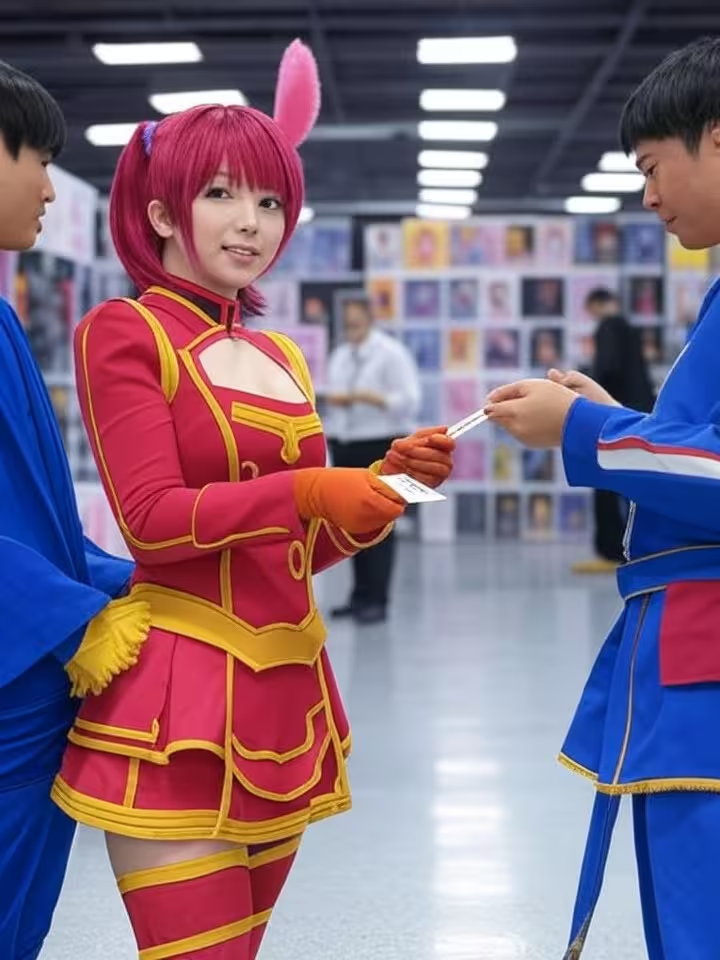
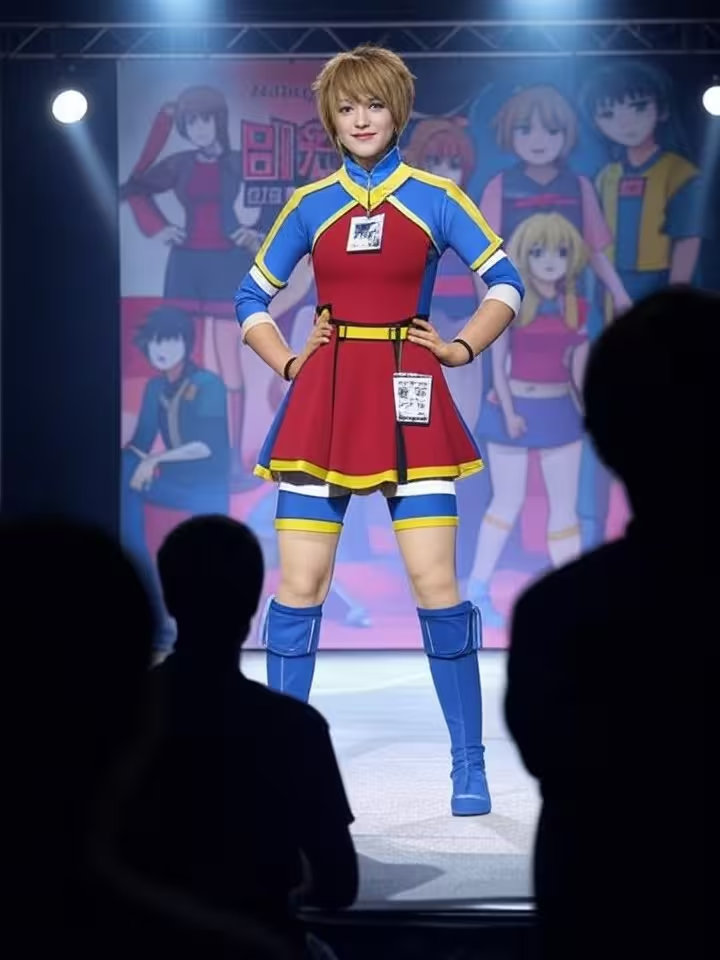
Conventions are not just about having a good time (although that too). They are networking opportunities that can change your career. There you meet other creators with whom you can collaborate, photographers who might want to work with you, brands looking for ambassadors.
Carry business cards with your alias, your networks, and your OtakuOshi link. When someone asks you for a photo on the convention floor, offer the card afterwards. It's a non-intrusive way to convert that 30-second interaction into a potential follower or subscriber.
Plus, conventions generate TONS of content. Photos on the show floor, with other cosplayers, on panels. Real-time stories generate high engagement because your audience feels like they're there with you. And the sets you make in the hotel room with your convention cosplay can later be sold as exclusive content.
Digital security and identity protection
This topic is serious and not talked about enough. As a content creator, especially if that content has bold elements, you are vulnerable to harassment, doxxing, and other threats.. Protecting yourself is not paranoia-it's necessity.
I use a full alias. My real name is not linked to my work as a creator. I use a secondary email exclusively for this, not linked to personal accounts. My creator social networks are on a separate phone. I never show details in photos or videos that could identify where I live-no recognizable building facades, car license plates, documents with addresses.
For payments, use platforms that do not reveal your direct banking information. OtakuOshi handles this securely, but if you use other methods such as PayPal, create a separate business account. Never give out personal financial information to fans, no matter how much you trust them or how much they offer to pay.
Watermarks on all your photos, without exception. Even if they ruin the aesthetics a bit, that's preferable to having content stolen. I've seen entire sets leaked that were clearly stolen from screen recordings because they didn't have adequate protection.
If you experience serious harassment-threats, stalking, extortion attempts-document everything with screenshots and report both to the platforms and, if necessary, to authorities. You are not alone, and legal recourse is available. Organizations such as Cyber Civil Rights Initiative offer support and legal guidance for creators facing online abuse.
Use VPN when working, especially if you use public WiFi. Change your passwords regularly and use two-factor authentication on all your accounts. These basic digital security steps can save you from many problems.
Constantly evolve without losing your essence
The last thing I want to share with you is this: the world of digital content is constantly changing, and you have to be willing to evolve with it.. But evolution does not mean abandoning what makes you unique.
Experiment with new types of content. Try genderbends of popular characters, crossplay that defies traditional expectations. Try new photography techniques-perhaps conceptual storytelling where each set tells a small story. Play with different editing styles.
When something doesn't work, don't look at it as a failure. Analyze: was it the timing? the promotion? did the concept just not resonate with your audience? Every «flop» is valuable information that brings you closer to better understanding what your community wants.
Collaborate with other creators. Joint shoots generate fresh content for both of you and expose you to each other's audience. I've done wonderful collabs that resulted in real friendships beyond work.
Keep learning. Take online photography courses, watch editing tutorials, study color theory. Read up on digital marketing and social media psychology. The more professional you become in the technical aspects, the better your content will be.
And here is the crucial point: build something sustainable. This is not about going viral once and disappearing. It's about creating a long-term business that allows you to live off your passion for years to come. That requires thinking strategically about branding, about revenue diversification, about gradual but steady growth.
Your next practical steps
I know I just threw a lot of information at you. So let me leave you with a simple route to get you started:
This week: Decide on your niche or at least an initial direction. Choose 2-3 cosplays that you are really passionate about and plan to make sets of them. Set up your basic photography setup with what you have or with a minimal investment. Create your profiles on the platforms you are going to use (Instagram, OtakuOshi at least).
This month: Produce your first batch of content-at least 3 different sets. Start posting consistently, even 2-3 times a week. Genuinely interact with other creators and your emerging audience. Study what type of content gets the best response.
In three months: Evaluate what is working and what is not. Adjust your strategy based on real data, not assumptions. Consider investing in better equipment if you are already generating some income. Start building your paying community on OtakuOshi if you haven't already.
Sincerely, monetizing your passion for cosplay is entirely possible. It's not easy or fast, but it's real. I have seen friends go from zero to generating an income that allows them to dedicate themselves full time to this. I have lived that transformation myself.
The most important thing is that you start. That you dare to go up that first set even if it scares you. That you overcome the inner voice that says you're not good enough. Because you are good enough exactly as you are, and your unique perspective is what's going to make your content resonate with your tribe.
See you in the next article, where I will delve into specific cosplay photography techniques that will make your sets stand out immediately. In the meantime, if you have questions or want to share your experience, leave me a comment. I really do read them all and respond when I can.
Now go and create something amazing. Your community is waiting for you.
Gradual and realistic growth
Don't expect to go viral overnight or generate thousands of dollars in your first month. Sustainable growth takes time. Focus on constantly improving, creating quality content, and building genuine relationships with your audience. The results will come if you are consistent and strategic.
Your safety is a priority
Never, ever compromise your personal security for content or money. Use aliases, protect your personal information, set firm boundaries. Remember that you can block, report and walk away from any situation that makes you feel uncomfortable. You owe nothing to anyone beyond what you explicitly agreed to offer.
Quality over quantity always
It's better to publish one amazing set a week than seven mediocre ones. Your fans value the effort and creativity you put into each piece of content. Don't burn yourself out trying to compete on volume with creators who have full teams. Your unique voice and distinctive quality are your true competitive advantage.
Frequently asked questions about monetizing cosplay content
How much money can I really make making cosplay content?
The honest answer is: it varies greatly. In the beginning, you may generate $50-200 per month while building an audience. With 6-12 months of consistent work, many creators reach $500-1500 per month. Those who take it very seriously and build loyal communities can reach $3000-8000 or more. I don't promise inflated figures because it depends on your niche, content quality, consistency and monetization strategy. The important thing is to start with realistic expectations and build gradually.
Do I need to show my face to be successful as a cosplay creator?
It's not strictly necessary, although it helps to generate connection. There are successful creators who hide part of their face with stylized masks, creative angles, or simply don't include their face on certain sets. If you decide not to show your face for privacy, make sure your photography, wardrobe, and production are especially strong to compensate. Many creators start out without showing their face and gain confidence over time.
What do I do if I find my content leaked or pirated?
Act fast. Take screenshots as evidence and send DMCAs (Digital Millennium Copyright Act takedown notices) to the platform where the stolen content is hosted. Most sites have procedures for this. Google also allows you to request removal of pirated content from its search results. Consider using monitoring services that track your online content. While you won't be able to remove everything (piracy is a constant problem), acting quickly minimizes damage and protects your revenue.
Do I have to make NSFW content to earn well?
Absolutely not. There are successful creators at all levels of content. Well produced SFW with elaborate cosplays and professional photography can generate solid revenue. R-15 (suggestive but not explicit) also has a strong market. The key is not how much you show, but the quality of your content, your connection with the audience, and your monetization strategy. Choose the level of content YOU are comfortable with-never let anyone pressure you to go beyond your personal limits.
How long does it take to start making real money with cosplay?
It varies, but generally expect to spend 3-6 months building an audience before you see consistent revenue. Some people get lucky and grow faster, others take longer. The important thing is to be consistent during that initial period, posting regularly, interacting with your community, and constantly improving your content. Don't get discouraged if you don't see immediate results-sustainable, organic growth takes time, but it's more durable than short-lived viral success.
Getting started in this business of creating otaku content feels like jumping into the void without knowing if there is a safety net waiting for you below. The screen...
In the vibrant world of international cosplay, few names resonate with as much strength and recognition as that of Katyuska Moonfox. This talented cosplayer, model and...
Why conventions are looking for creators with an established presence Here's the unfiltered truth: invitations as guest of honor do not appear from the...
Please note:
This action will also remove this member from your connections and send a report to the site admin.
Please allow a few minutes for this process to complete.










 English
  Español
  Português do Brasil
  Français
  Deutsch
  Italiano
  Svenska
  Polski
  Nederlands
Responses