Turning your cosplay hobby into something you get paid for is exciting, and that buzz makes it easy to skip the boring but vital bit: learning to protect your identity online. Nobody’s asking you to be paranoid or to eye every subscriber with suspicion. It’s simply that earning from cosplay and otaku culture works best when there’s a firm wall between the persona your fans see and the person who goes to work, visits family and pops to Tesco.
A common mistake is assuming doxxing and leaks only matter once you’ve got thousands of followers. In practice the safeguards should be in place before your very first set goes live, because the information you leak early on is the hardest to claw back. This guide walks through each layer in turn, so you can get on with the part you actually enjoy: making things and building a community that’s worth having.
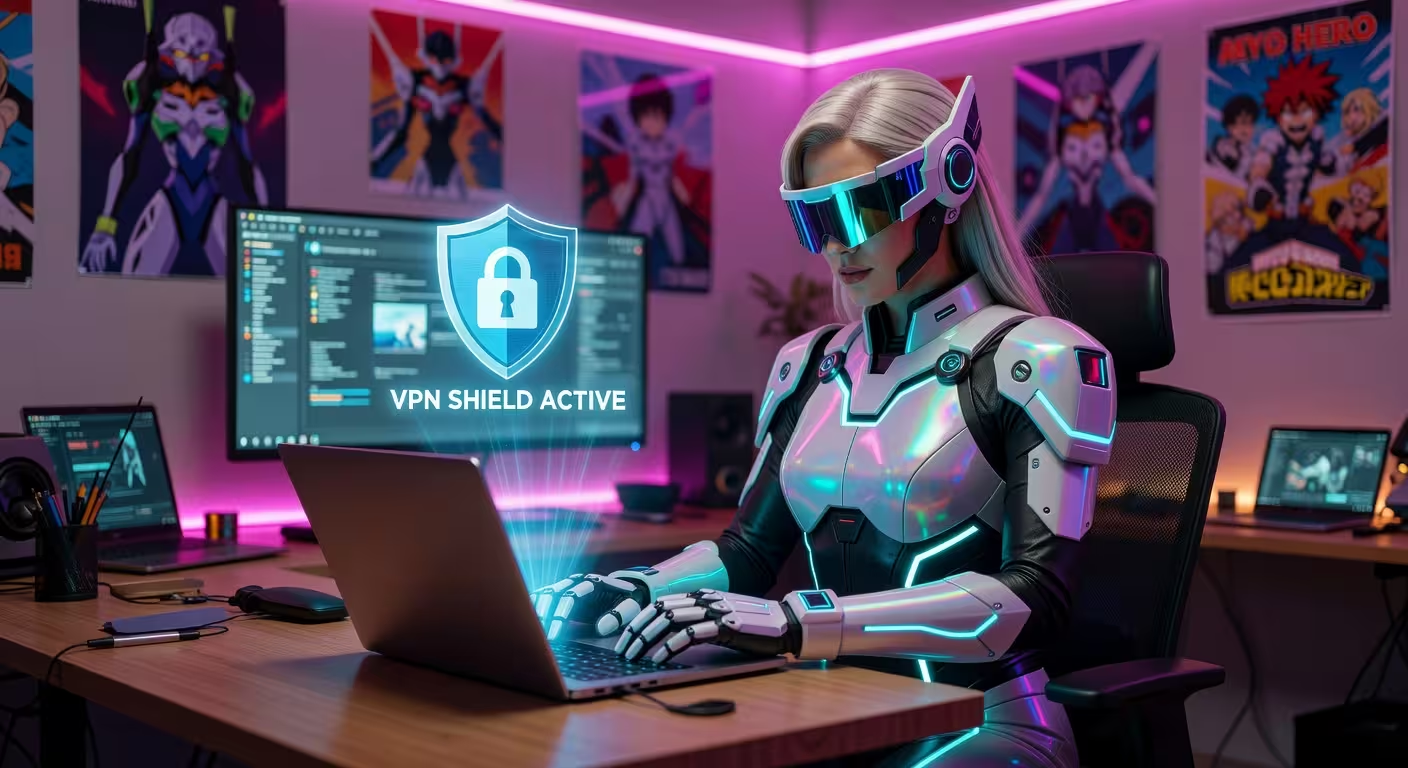
Start with the foundations: a creator identity that’s separate from you
Keeping your private life apart from your creative work begins with a persona that stands entirely on its own. Picking a cute handle is only part of it. What you’re really building is a professional character who can speak for you in public without pointing back to your real name, face or postcode.
Choosing a handle that sticks but can’t be traced
Your handle is how people will know you on OtakuOshi and across your socials. The balancing act is this: fans need to remember it easily, yet nobody should be able to work backwards from it to the real you.
Leave out anything biographical: no versions of your real name, no birth year, no hometown. If you’re from Manchester and were born in 1995, “MancGirl95” or “ManchesterCosplay” is a gift to anyone trying to find you. Draw instead on characters you love, the visual style of your work or more abstract ideas from anime.
A few approaches tend to work well. You can pair a character-flavoured word with an image (“SakuraVeil”, “AzureMoon”), mix a Japanese word with the mood of your content (“YumeDreamer” for something soft, “KuroNeko” for a bolder vibe), or invent a word that sounds good and means nothing anyone could trace.
Once it’s chosen, stick to the same handle everywhere: Instagram, TikTok, X, Discord and anywhere else you chat to fans. Consistency builds your brand, and it also means followers can find your official accounts without you ever having to hand over anything personal.

A separate digital setup
A handle on its own won’t do much if everything behind it is linked to your personal accounts. The next step is a set of tools used only for creator work, starting with a dedicated email address. Privacy-focused providers such as Proton Mail or Tuta give you more privacy than a standard webmail account and don’t track what you do.
Use that inbox for creator platforms, your public social accounts and messages with collaborators, and nothing else. Keep it well away from online shopping, your bank or any account carrying your legal name. If a platform needs to verify who you are, go through its official support or verification process; ID documents should never end up in a public post or a DM.
It’s also worth claiming your handle on platforms you don’t use yet. Otherwise an impostor could register it, pose as you and leave your followers confused. Namechk and similar checkers scan dozens of sites at once to see where your username is still available.
The tech that keeps you hidden
Your phone and laptop can either guard your privacy or quietly give it away. A handful of tools, set up properly, make most of the difference.
A VPN to mask where you are
A virtual private network hides your real IP address and encrypts your traffic, so your uploads and online activity can’t easily be traced to where you physically are. That matters most when you’re posting, replying to fans or logging in over public Wi-Fi at a con or on the train. Paid services such as NordVPN, ExpressVPN or Surfshark are worth every penny. Steer clear of free VPNs, since many of them sell your data or run shaky connections.
A second phone number
Most platforms want a mobile number for text verification, and your personal one shouldn’t be it. A cheap pay-as-you-go SIM in a spare handset, used only for creator apps and codes, does the job. Virtual-number apps that receive texts without touching your own line are another option where they’re available. It’s a small step, but it stops anyone finding your real WhatsApp or number through a leaked database.
Stripping photo metadata
Every photo from your phone or camera carries EXIF data: the device, the settings and, worst of all, the GPS coordinates of where it was taken. Clear it before uploading with ExifTool, a phone app like Scrambled Exif or Lightroom’s export options. Some sites scrub part of it on upload, yet trusting them to catch everything is a gamble. Forget once, and a stranger could narrow down the neighbourhood where you take your photos.

Watermarks that actually deter copying
A watermark is your first line of defence against pirates and reposters. The trick is placing it so it does its job without spoiling the look of your set.
Corners get cropped off in seconds, so put the mark somewhere that can’t be removed without wrecking the shot, such as near the face or across a key part of the costume. Around 30–50% opacity keeps it visible without shouting over the picture.
Move it around from photo to photo within a set, which makes automated removal much harder. Include your handle and, if you like, the logo of the platform you post on, so anyone who stumbles on a copy knows where the real thing lives.
Public teasers on social media can carry a bolder watermark, because their job is to send people to the full set on a platform like OtakuOshi. Behind the paywall a lighter mark is fine, as long as there’s still one there.
Leaked sets: how to respond
Even with every precaution, leaks happen to a lot of creators. It isn’t a sign you did something wrong; it comes with publishing online. Having a plan ready means you can act fast instead of panicking.
Copyright takedowns and DMCA notices
The DMCA (Digital Millennium Copyright Act) is a US law covering copyright online. You don’t need to live in America to use it: most global platforms follow its notice-and-takedown process because they’re based in the US or do business there, so a creator in the UK can file one just as easily.
When you spot a leak, first work out where it’s hosted: a particular website, a forum, a Discord server or a file-sharing service. Most have a DMCA or copyright form for reporting infringing material. You’ll be asked for proof that the work is yours (links to your official posts), the exact URL of the copy and a statement, made under penalty of perjury, that what you’ve said is accurate.
DMCA.com and similar services can streamline this and send several notices at once. Some creators also pay a takedown agency to monitor and remove pirated copies, though that means a monthly bill. If the leaked material is intimate and you were over 18 in it, the UK’s Revenge Porn Helpline, run by the charity SWGfL, supports adults with removal, and its free StopNCII.org tool lets participating platforms detect and remove matching images. You can also report stolen work through OtakuOshi’s complaints page.

Keeping an eye out before leaks spread
Rather than finding leaks by accident, set up a simple routine. A Google Alert for your handle and its common misspellings will email you whenever it turns up on a new page.
Every so often, run a reverse image search on Google Images or TinEye using a few of your most popular shots. Few methods are faster for catching unauthorised reposts.
Creator group chats and forums are useful too, as people swap warnings about piracy sites and new ways to protect work. Looking out for each other pays off: another creator may be the one who tells you your set has popped up somewhere it shouldn’t.
Staying safe at cons and meet-ups
A weekend at MCM London or Hyper Japan is a brilliant way to meet your community in person, but it brings its own privacy headaches. Fans may well recognise you from your online work, and handling that gracefully takes a bit of planning.
Ways to keep a low profile on the day
One option is to wear something completely different at cons from what you post. Say your page is mostly Yor Forger or Tifa Lockhart; at the con itself you might go crossplay, or pick someone obscure. You’ll be far less likely to be spotted.
Planning to wear one of your signature looks anyway? Rehearse a couple of polite, no-nonsense replies for when fans get nosy. Try “That’s off the clock, sorry, but ask me anything about the build!” or “Message me on my official pages and I’ll get back to you.” Both hold the line while staying warm.
Your hotel, your travel companions and your after-show plans are nobody’s business but yours. It’s tempting when someone seems lovely, but your safety comes first, every time. Should anyone keep digging or start to unsettle you, leave the conversation and, if necessary, flag down a steward or security.
Watch out for group shots and photos with other attendees. Ask people not to tag you without checking first, particularly if you have personal accounts kept apart from your creator identity. Some creators keep their personal profiles private, or skip them entirely, to avoid this kind of accidental link.

Boundaries with fans, and how to keep them
Managing your relationship with fans is one of the trickiest parts of the job. Most are respectful and simply want to support you, but a few will test the limits or build up expectations that aren’t realistic.
Red flags to watch for
Look for patterns in DMs and comments. Warning signs include very personal questions about your life away from your content, attempts to “save” you from your work with dodgy financial offers, possessive remarks about you or your posts, and pressure to make content more explicit than you normally would.
Be wary, too, of people who rush to become your “friend”, overshare about themselves and expect the same back. Sometimes it’s a deliberate move to make you relax and reveal more. However warm the chat feels, your relationship with subscribers is a professional one, not a personal one.
Handling DMs and requests
Spell out early on which kinds of contact are on the table and which aren’t. A line in your bio such as “I reply to comments and messages about my work. No video calls, and I don’t share personal info” saves a lot of awkward conversations later.
You don’t owe a reply to every message; trying would wear anyone out. Put your energy into the nice comments, the craft and camera questions, and feedback that actually helps. Ignore or block anything inappropriate, and don’t feel guilty about it.
Custom commissions need a written process and a price list you’re happy with. Turn down anything that makes you uncomfortable, whatever’s on offer. Your peace of mind is worth more than the money, and saying yes once makes the next request harder to refuse.
Looking after your mental health
Staying safe isn’t only about devices and doors; how you feel matters just as much. Guarding your identity, chasing pirates and fielding difficult messages day after day can lead to anxiety, burnout and wondering whether it’s worth carrying on.
You are not your follower count
It’s easy to start judging yourself by subscriber numbers, likes or monthly earnings. Those figures depend on plenty you can’t control: shifting algorithms, passing trends, a crowded market, even which day of the week you posted.
A set that underperforms doesn’t make you any less talented or worthwhile. Every creator has ups and downs, including the ones who seem to be on a permanent winning streak. Remember what got you into this in the first place, which for most of us is simply loving cosplay, anime and creating.
Finding your support network
You don’t have to deal with all this on your own. Other otaku creators on Discord, in Telegram groups or in niche communities understand exactly what it’s like, and swapping stories, safety tips and moral support helps enormously.
If the stress is getting on top of you, think about talking to a professional. A therapist who understands online work or content creators can help you cope with the pressure, hold your boundaries and work through things like harassment or leaks.
Rest is allowed. There’s no rule that says the uploads must never stop. If you’re running on empty, tell your audience you’re taking a short break. The subscribers who really value you will understand and wait; anyone who moans probably doesn’t have your wellbeing at heart.
Creator safety FAQs
If privacy matters to you, yes. Masking your IP address means your posts and logins can’t easily be matched to a real-world location. It counts most during uploads, account admin and subscriber chats. There’s a monthly fee, usually just a few pounds, which is a small price next to the risk of being exposed. Even if everything you post is SFW, keeping your location private is basic internet hygiene.
Stay calm and set the tone straight away. Smile, say thanks for the support, and explain that your personal life stays off-limits at events. Give nothing away about home, hotel or what you’re up to later. Anyone who won’t take the hint can be left behind, and stewards or security are there if it escalates. Swapping your usual online characters for something different on the day also helps you blend in.
File DMCA (Digital Millennium Copyright Act) takedown notices asking for infringing copies of your work to be removed. Platforms generally provide a form asking for evidence that you made the work plus a link to the infringing copy. DMCA.com and comparable services can batch several notices together. Depending on the site, it can take anything from days to weeks. If a site has no obvious takedown process, contact its hosting provider instead. Paid takedown agencies are another option, though they charge an ongoing fee. For intimate images, adults in the UK can also contact the Revenge Porn Helpline.
That’s entirely up to you and how much exposure you’re comfortable with. Showing your face can make the connection with fans feel more personal and help people recognise your brand. On the other hand, it chips away at your anonymity and makes it likelier you’ll be recognised in everyday life. Many creators never show their full face, relying on clever angles, themed masks or close-ups of costume details. You can start faceless and decide later whether to reveal more, or stay anonymous for good. Whichever you choose, let comfort and safety make the call, not pressure.
Start a log: capture every threatening message in a screenshot that shows when it arrived. Block the person on every platform straight away and report them to the site where it happened, as most have rules against threats and harassment. If the threats are serious or involve physical violence, contact the police and show them your evidence; in the UK that means 999 if you’re in immediate danger, or 101 or your force’s online form otherwise. You might also choose to tell your community what’s going on (without giving away anything that puts you at risk) to warn others and create a public record. Harassment can leave real scars, so reach out to fellow creators or a counsellor rather than carrying it by yourself. No upload or fan is worth more than you being safe.
Protect your identity online and build a career that lasts
Taking steps to protect your identity online isn’t overreacting; it’s common sense. It’s ordinary professional practice, and it’s what lets you enjoy cosplay while building a career that can last. Each safeguard you add means one less thing to worry about the next time you hit upload.
You don’t have to do everything at once. Begin with the essentials: a solid handle, separate accounts and devices for creator work, and watermarks on your photos. As your following grows, add further layers as and when you need them.
Above all, never trade away your safety because of pressure from fans, chasing numbers or comparing yourself with other creators. Your physical, digital and emotional wellbeing comes first. Making cosplay content should leave you feeling confident and proud, not permanently on edge.
On OtakuOshi you’re part of a wider community of otaku creators, and our platform security page explains what we do on our side. Share what you’ve learnt, pick up tips from others and ask for help whenever you need it. The more creators look out for each other, the harder it gets for leakers and stalkers. Ready to set up a creator profile with these safeguards in place? Join OtakuOshi for free.