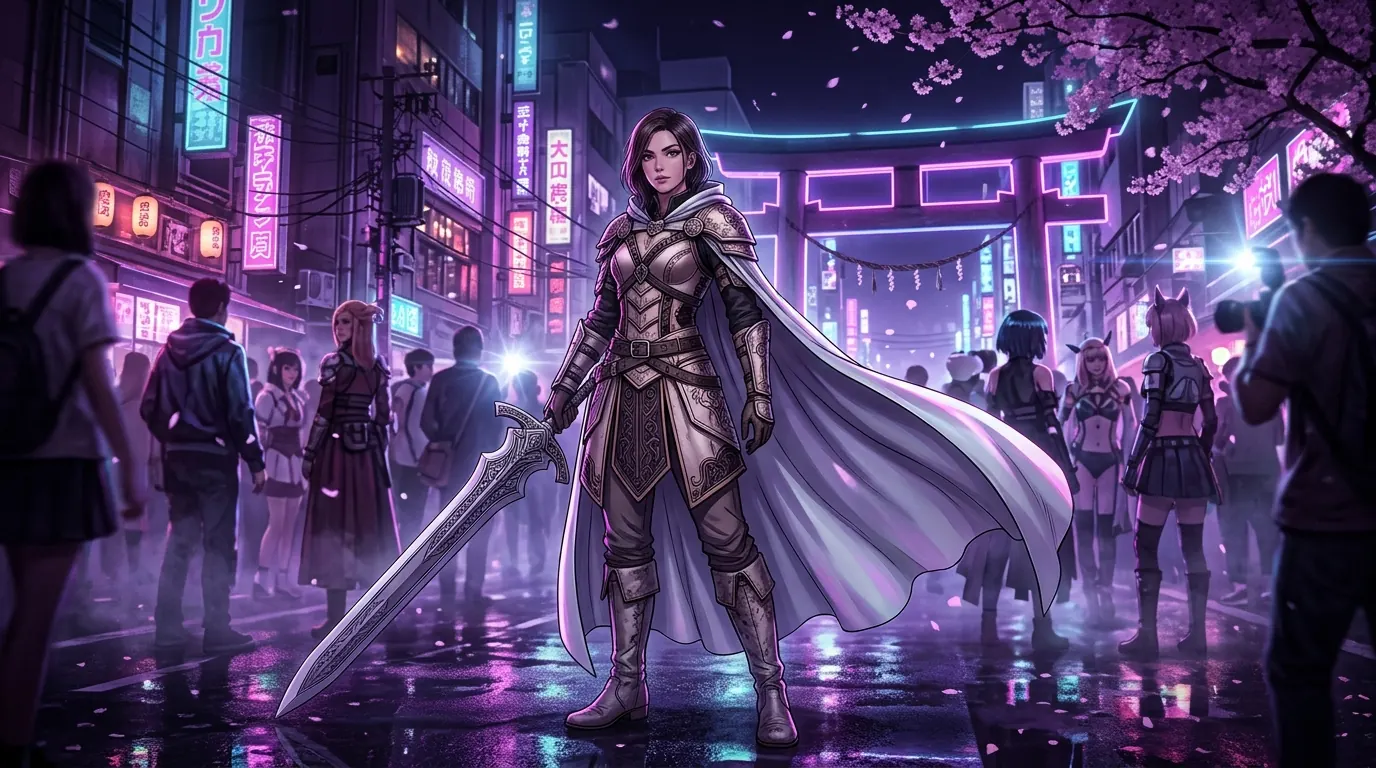
Spend an hour at any UK con and you’ll lose count of the Demon Slayer cosplay walking past. It’s easy to see why the series has such staying power on the con floor. Kimetsu no Yaiba designs its cast around strong outlines, centuries-old Japanese textile patterns that read from the far side of a hall, and one shared uniform under almost every outfit. Get a good haori and a carefully styled wig sorted and the hard part is largely done.
Below we go through the five most requested characters (Nezuko, Mitsuri, Shinobu, Tanjiro and Zenitsu) one by one: the kit list for each, how to approach the haori and its print, and how to decide between buying off the peg and sewing it yourself.
Demon Slayer cosplay starts with the Corps uniform
It pays to know how the costumes are put together before you settle on anyone. Underneath the colourful layers, the slayers share one outfit. Think of a black or very dark jacket buttoned up to a stand collar, cinched with a white belt, over roomy hakama-like trousers that are bound tight below the knee with leg wraps called kyahan, white on some characters and coloured on others. Across the back sits the kanji 滅 (metsu, meaning “destroy”). The haori, a loose Japanese jacket worn open at the front, goes on last, and it is the haori far more than the uniform that makes a character recognisable.
That is handy if you like variety. Keep the uniform, change three things (haori, wig, sword) and you have a new character, so one base can carry you through several cons in a year.
- Shoes: the canon look is zōri sandals over split-toe tabi. For a long day standing in queues, nobody will mind if you swap in plain black trainers or slip gel insoles into your shoes.
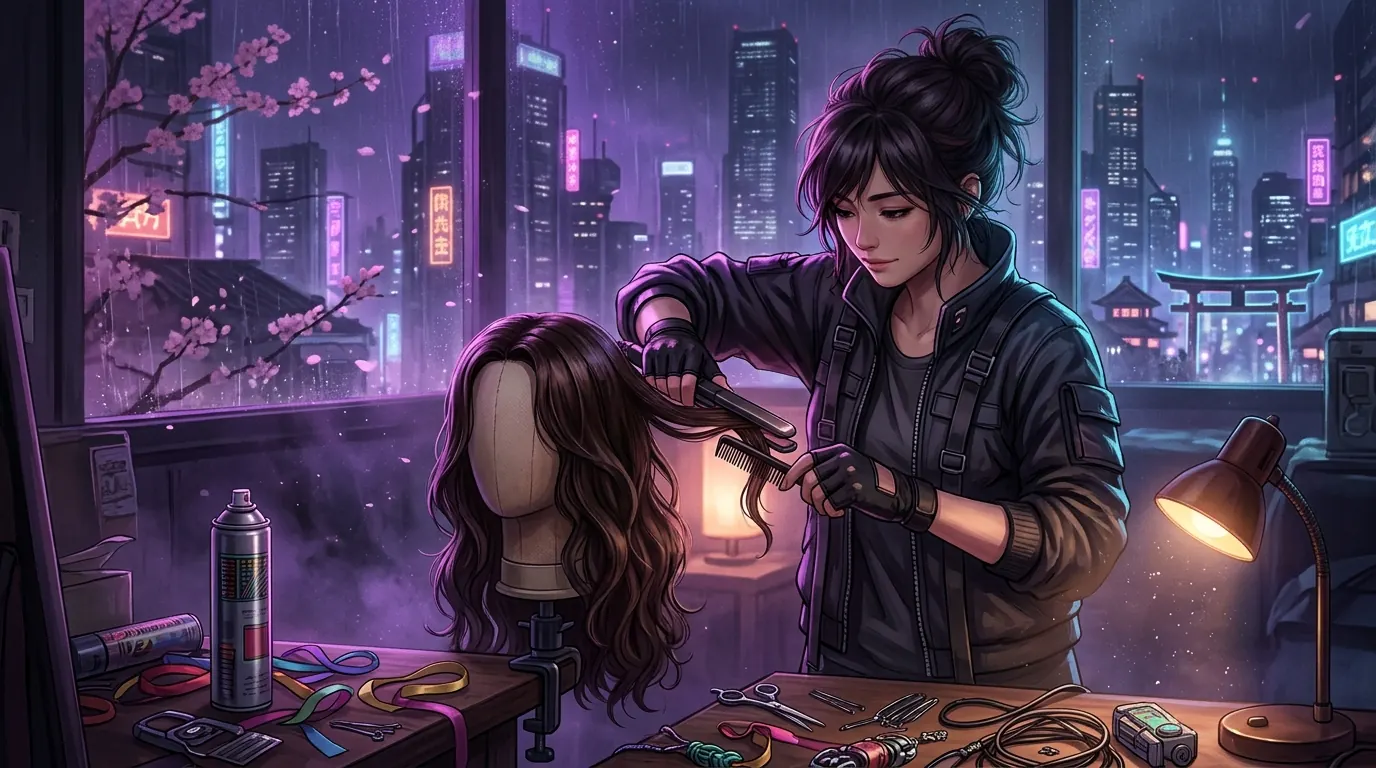
- Wigs: expect a fade to a second colour at the ends on most of the cast. If straighteners or a hairdryer will be involved, buy heat-resistant fibre.
- Swords: build them light, from foam, thin PVC or balsa wood, and leave metal out entirely. The section on UK con rules near the end explains why.
One thing on tone before we start. In the story Tanjiro, Nezuko and Zenitsu are teenagers, so keep their cosplay as a straightforward tribute to the characters rather than anything suggestive. Looking for other series and simpler builds? Our list of easy anime fancy dress ideas has plenty more.
Nezuko cosplay: pink kimono and bamboo muzzle
Nezuko is the face of the series for a lot of casual viewers, and her outfit is pretty, distinctive and surprisingly achievable.
Nezuko’s kit list
- Kimono in a soft pink, covered in asanoha (hemp leaf), a grid of six-pointed stars. Japanese parents once dressed babies in it because the motif stood for health and warding off bad luck.
- Obi in red and white checks, slimmer than a formal sash, tied off with an orange cord (obijime), while a band of pale green fabric (obiage) shows along its top edge.
- Haori in dark brown, cut long enough to brush the calves.
- Hair bow: a little pink one, worn on the left.
- Bamboo muzzle, tied on with red cloth.
- On the feet, pink-strapped zōri and white tabi, with black bindings wound up the shins.
Styling the wig, and what to do about her eyes
You are after very long black hair with chunky, angular waves, shifting to a fiery orange somewhere around elbow level. Many ready-made Nezuko wigs arrive with that fade already in place. Starting from an all-black wig instead? Either sew orange wefts into the underside or tint the lengths with an ink suited to synthetic fibre. A low-heat pass with straighteners followed by hairspray will lock in those zigzag kinks.
Canon gives her pale pink eyes. Get coloured lenses through an optician or after a proper fitting with a qualified eye-care professional, stick to the wear schedule and never share them. Cheap fashion lenses with no safety checks have been known to scratch or infect the cornea, which is a terrible trade for one costume. Skipping lenses is perfectly fine, and a gentle wash of brown and rosy liner does plenty.
A bamboo muzzle you can actually wear
Everyone wants the muzzle in the photo, and nobody enjoys wearing it for six hours. Slim, sanded bamboo is the authentic option; a halved length of PVC pipe or a painted cardboard tube is lighter still. Knot the red cloth loosely at the back of the head, or fix it with Velcro. Keep it clear of your jaw and your airways at all times, and slip it off whenever you are eating, drinking or stuck in a slow queue; it takes seconds to put back on for a picture.
Mitsuri Kanroji cosplay: pink and green plaits
Bubbly, bright and pink from head to toe, the Love Hashira suits anyone who wants a fun character to play. Most of your time will go on the hair.
Getting the three plaits right
Mitsuri’s hair starts light pink at the roots, turns lime green from around the middle and is gathered into three chunky plaits. Her fringe splits into five ragged locks, each also tipped with green. A long pink wig is your starting point; clip in or stitch green extensions first, then plait. Finish the face with pale green eyes and the two tiny beauty spots just under them, dotted on in brown pencil.
Her version of the uniform
Her uniform has been reworked a fair bit. It is a deep, almost plum-tinted shade, left unbuttoned over the chest, and a short pleated skirt replaces the hakama. Obanai’s gift, a pair of green vertically striped stockings, sits beneath long navy socks. Add a plain white haori and white zōri finished with pink straps and bows.
If the open neckline is not for you, wear a vest or bodysuit underneath dyed to match the jacket. Lots of people do exactly that for long or outdoor events, and with that wig and colour scheme nobody will mistake who you are.
Then there is the sword: pink, impossibly thin and bendy enough to act like a whip, on a magenta hilt with a guard shaped like a four-leaf clover. A narrow strip of thin EVA foam, painted, or a stiff but flexible plastic band copies the look with zero risk to passers-by.
Shinobu cosplay: the butterfly haori
Shinobu Kocho may be the classiest look in the whole series, and her costume lives or dies by the haori.
Her kit list
- Uniform: black with just a hint of purple, gold buttons, and black hakama tucked into butterfly-patterned tabi.
- Haori: white, with butterfly wings spreading over the sleeves and lower edge in a turquoise-to-pink blend, plus cuffs trimmed in black and white dots.
- Wig: shoulder length, going from black into dark purple, swept into a low bun and fixed with a white-and-purple butterfly clip.
- Purple-strapped white sandals.
Her violet, pupil-less eyes are hard to recreate. Not keen on lenses? Lilac on the lids and a composed face get you most of the way, since that unbothered smile is really what people recognise.
Her stinger sword
Shinobu’s weapon breaks the katana mould. The grip is ordinary, but the slim lavender-blue blade tapers to a needle point, and the guard is a four-petalled flower. Make yours from foam and keep the tip blunt and bendy; in a crowded hall even a pointed plastic end can catch someone.
Tanjiro cosplay: green check and hanafuda earrings
If this is your first cosplay, start here. Everything Tanjiro wears is easy to source, and even non-fans tend to know who he is.
- Haori in the famous green-and-black check, known in Japan as ichimatsu and seen as a symbol of prosperity and of things carrying on unbroken.
- Uniform: the dark, gakuran-style jacket, white belt and white wraps on the lower legs.
- Hanafuda earrings: small white tiles with a red sunrise design. Laminated card or a little polymer clay will do; glue them to clip-on findings if you have no piercings.
- Wig: short, a little scruffy, black going to deep red at the ends.
- Forehead scar, on his left, either painted in a dark red or sculpted with SFX latex. Do a small patch test before using any adhesive or latex on your skin.
- Tabi plus red-strapped zōri.
The wooden box
Fancy going the extra mile? Make the wooden box he carries Nezuko in, which reliably draws more cameras than anything else in the costume. Weight is the enemy here, so reach for foam board, chunky EVA or the thinnest plywood you can find, and strap it on with backpack straps tucked out of sight beneath the haori. Bring a friend dressed as Nezuko and people will queue for the shot. If you want something more elaborate, the prop makers on OtakuOshi post their build processes.
Watch the sword detail too. Early on, Tanjiro’s black katana has a round guard like a little wheel; later he carries Rengoku’s flame-shaped guard, so match it to your chosen arc.
Zenitsu cosplay: the yellow triangle haori
Zenitsu Agatsuma is a fan favourite and one of the gentler builds on this list. Everything hinges on his haori, which blends from yellow into orange and is printed all over with small white triangles taken from the traditional uroko, or fish-scale, pattern.
- Uniform: a mustard-brown jacket over a white shirt, fastened with the usual white belt.
- Leg wraps: they repeat the haori’s yellow, orange and white triangle print, with three little white bows down the front.
- Wig: short, blond and jaggedly layered, orange at the tips.
- Sword: a black blade streaked with yellow lightning, a yellow grip and a white sheath.
Close-ups will show his eyebrows, which are gold and split into a fork. Block out your natural brows using a glue stick and powder, or a dedicated brow-cover product, and paint his shape back on in yellow and orange shadow. Then practise his two moods in the mirror: shrieking comic terror, and the serene, eyes-shut calm right before Thunder Breathing.
Sewing a haori: pattern pieces and prints
Short on time? Put your sewing hours into the haori and nothing else. Even over a simple uniform, a well-finished one makes any Kimetsu no Yaiba cosplay look considered.
Mostly straight lines
Beginners can relax, because a haori, much like a kimono, is basically a set of rectangles. The back is two panels seamed down the middle; add a pair of front panels, two generous sleeves and a long neckband that runs down both front edges. Certain patterns include small side inserts called machi to give a little more room. How long to cut it varies by character, from thigh length for Tanjiro to far longer for Nezuko.
Take your chest and sleeve measurements first and be generous with seam allowances. The garment ought to fall loosely, because a tight haori hangs badly. First time making clothes? Run up a mock-up in inexpensive cotton before cutting the good stuff. The tutorials and templates area of OtakuOshi features creators posting patterns and full build walkthroughs.
Picking your fabric
For a first attempt, poplin cotton or lightweight gabardine is kind to you: both iron crisply and hold fabric paint well. Sublimation printing only works on polyester, so use that if you go down that route. Anything flimsy or see-through will wrinkle and reveal the uniform beneath, so avoid it.
Getting the pattern onto the fabric
- Buy it printed: chequerboard and asanoha are classic Japanese designs, so fabric shops and online sellers stock them fairly often. Your job is then finding the right size of repeat and colourway.
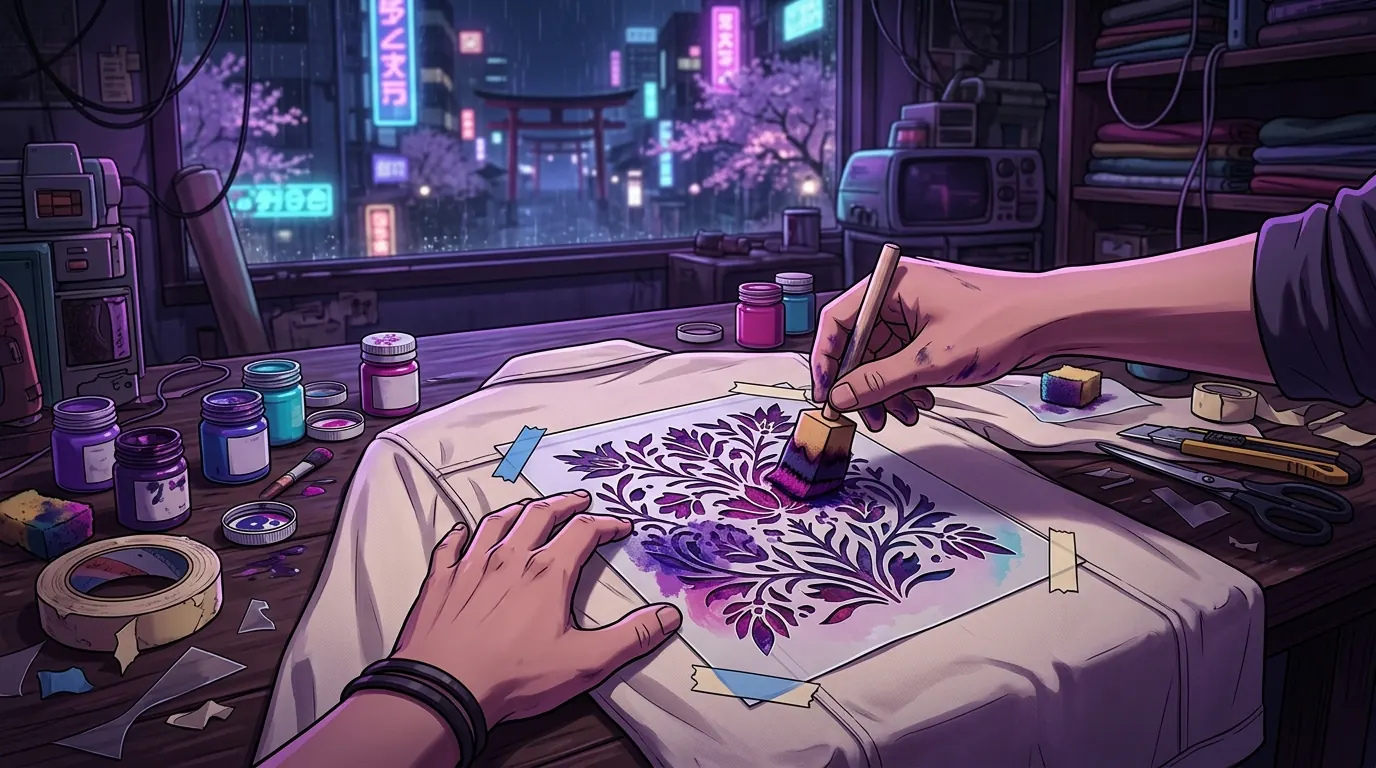
- Stencil and fabric paint: use masking tape to lay out Tanjiro’s grid, then fill every other square. Zenitsu’s triangles are quicker with an acetate stencil. Iron to set the paint, following the instructions on the pot.
- Iron-on vinyl (HTV): perfect for sharp, geometric edges. Cut the shapes with a craft knife or a Cricut-style machine, then press.
- Sprayed fades: for Shinobu’s wings or Zenitsu’s yellow-orange blend, thin your fabric paint and build it up with a spray bottle or airbrush, letting each light coat dry before the next.
A bit of trivia: Shueisha, which publishes the manga in Japan, applied to trademark the haori designs. The Japan Patent Office refused Tanjiro’s, Nezuko’s and Zenitsu’s in 2021, judging them too close to common traditional patterns, while those of Giyu, Shinobu and Rengoku went through. None of this affects a costume made for yourself, though anyone thinking of selling haori should read up on intellectual property first.
Shop-bought or handmade Demon Slayer costume?
There is no single right answer. It hinges on how many free evenings you have, what you can spend and how often you will wear it.
Reasons to buy
Demon Slayer outfits have been a staple of fancy dress shops, cosplay retailers and marketplaces for years, so you will be spoilt for choice. Buying is the sensible call for a first costume, a con that is only a few weeks off, or anyone who simply does not want to sew. Run through this checklist before checking out:
- Ignore the letter size and go by the measurements in centimetres; costumes cut to Asian sizing usually come up smaller than UK equivalents.
- Look for photos from buyers rather than relying on the product shots.
- Read what is actually in the bag, since wigs, swords and footwear are nearly always sold separately.
- Ask about the material. Shiny, thin polyester haori photograph badly.
Shopping for merch rather than a con outfit? Stick to official licensed goods, which usually print the series copyright on the tag or box.
Reasons to make it
Sewing your own Demon Slayer cosplay means the fit, shades and finish are all your call. It also makes you eligible for masquerades and other competitions, many of which score handmade work higher or insist on it, so read each contest’s rules before signing up. Expect it to take longer than you planned; most people also find it far more rewarding.
Mixing the two
A popular compromise once you have a costume or two under your belt: buy the plain uniform, since it varies little between characters, and spend your energy on a handmade haori, homemade props and a properly styled wig. The hours then go into the parts people notice. If you want to compare other characters by difficulty, our list of cosplay ideas for women (and men) rates 30 costumes by level.
UK convention prop rules
Swords are where people get caught out. MCM Comic Con’s published costume, weapons and props rules (the version for its Birmingham show) ban metal blades whether sharp or blunt, allow melee props in sensible materials such as lightweight wood, foam, card or PLA, and cap length at 150 cm. They also ask you to keep props fully out of sight while travelling. Each UK event writes its own policy, so check yours before setting off, and keep that katana in its saya when you are among crowds.
Your best reference material is the original work, which wraps up in 23 manga volumes. Planning a Hashira look from the Infinity Castle arc? The trilogy’s first film reached Japanese cinemas in July 2025, while part two still had no confirmed date at the time of writing, so watch the official accounts for news.
FAQs
Who is the best Demon Slayer character for a beginner?
Most people would say Tanjiro. Green-and-black check fabric for his haori is easy to find, and a short wig is low-maintenance. Zenitsu is nearly as straightforward. Nezuko and Mitsuri ask more of your wig skills, while Shinobu’s difficulty comes down to the haori gradient.
Roughly how long will a haori take me?
That varies with skill level and how complex the print is. The straight seams go together quickly; painting a check or triangle repeat by hand is what eats the time, often several evenings once you allow for drying. If a con is looming, do the haori first and the extras after.
Will a UK con let me in with a katana?
Usually, as long as it is a light prop made from foam, card, plastic or soft wood that complies with the show’s policy. Anything metal or with an edge will normally be refused. Security may look over props at the entrance and have the final say on anything borderline.
Should I wear coloured contacts for cosplay?
Only regulated lenses, fitted by a professional and used exactly as instructed. Avoid market stalls and websites that cannot tell you where the lenses come from, never nap in them and never lend them out. Any discomfort means they come out and you book in with an optician.
Is Kimetsu no Yaiba good for group cosplay?
Few series do it better. The core four are Tanjiro, Nezuko, Zenitsu and Inosuke, and if your group is bigger, the Hashira give everyone a completely different outfit. Pick one point in the story together so that uniforms and weapons line up.
Share your Kimetsu no Yaiba cosplay on OtakuOshi
A hand-painted haori or a triple-plaited wig soaks up hours, and that work deserves to be seen. On OtakuOshi, cosplayers and prop builders post works in progress, shoots and tips for the fans following them. Join for free to back the creators you admire, and when your slayer costume is finished, put your own Demon Slayer cosplay up there as well.
Sign up to our newsletter
We'll email you whenever we publish something new.